
AI Collectible Identification
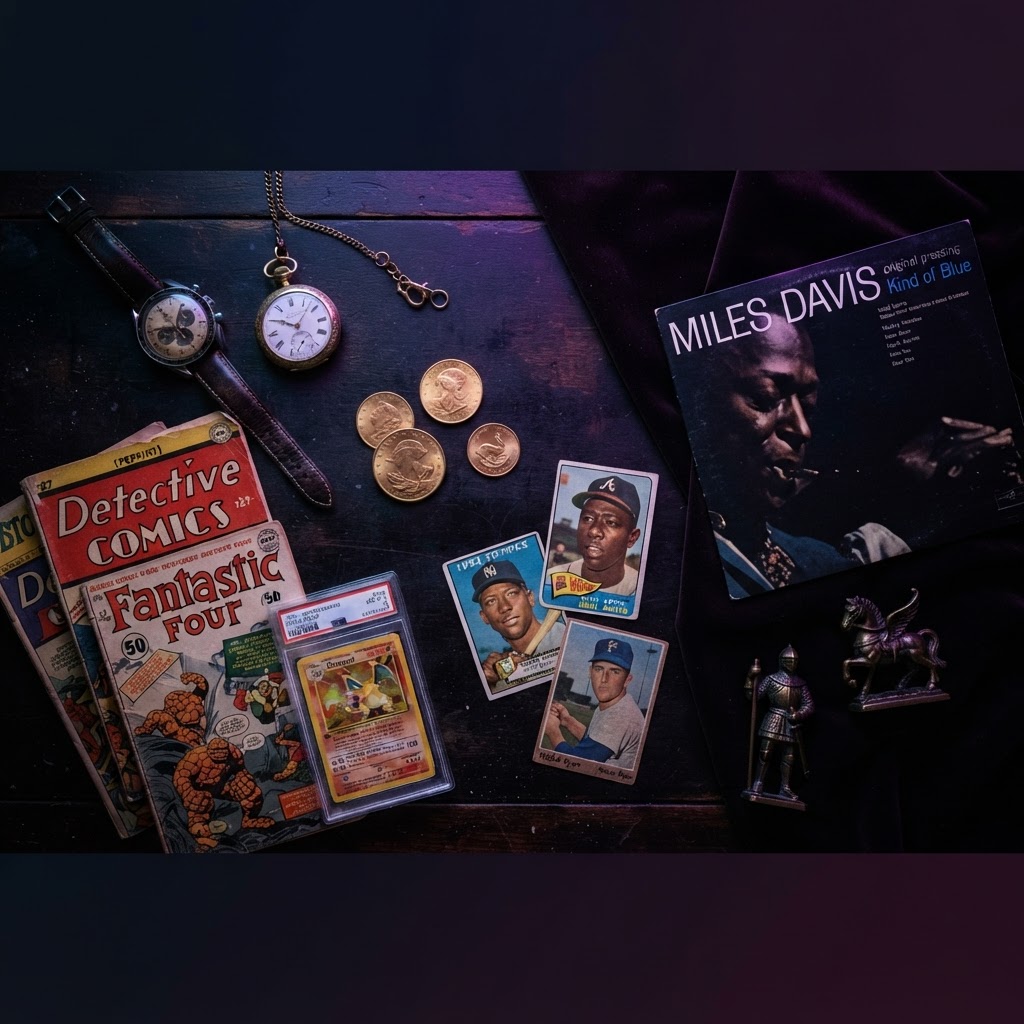
AI-powered collectible identification from a single photograph. Identify trading cards, coins, watches, comics, and more. Detect barcodes, serial numbers, and condition.
Not sure what you have? MPC's AI collectible identification analyzes a photograph of your item and tells you what it is — the category, the specific model or set, detected identifiers like barcodes and serial numbers, and an assessment of condition. It is the fastest way to identify an unknown collectible.
How AI Identification Works
When you upload a photograph, MPC's multi-stage AI recognition system goes to work. It identifies the category (trading card, coin, watch, etc.), narrows down to the specific item (Pokémon Charizard, 1909-S VDB Lincoln Cent, Rolex Submariner), detects any visible identifiers (barcodes, serial numbers, ISBNs, issue numbers), and assesses the condition from the image.
What AI Can Detect
- •Category and subcategory — what type of collectible it is
- •Specific identification — the exact item, set, model, or variant
- •Barcodes and ISBNs — for books, comics, and packaged items
- •Serial numbers — for watches, electronics, and serialized items
- •Certification numbers — for graded and slabbed items
- •Issue and edition numbers — for comics and limited editions
- •Condition assessment — visible flaws and an overall condition estimate
Confidence Levels and Confirmation
AI identification is not perfect, and MPC does not pretend it is. Every identification includes a confidence level — from exact match to needs confirmation. You always have the opportunity to review, edit, and confirm the AI's analysis before saving. You are in control; the AI is a tool to speed up the process, not replace your judgment.
AI image recognition for collectibles works by analyzing millions of data points within a photo, such as color profiles, text patterns, and specific physical geometry. When you upload an image, the system breaks the visual data down into features, comparing these against a massive database of verified high-resolution images. This process, often powered by convolutional neural networks, can identify logos, serial numbers, and specific manufacturing flaws that are invisible to the naked eye. The AI learns the difference between a rare original item and a common reproduction by spotting subtle variations in ink density or material texture. Because the system is cloud-based, it continuously evolves by learning from each new submission, improving its precision over time. This technology effectively democratizes professional-level identification, making expert insights accessible to hobbyists everywhere simply by taking a clear, well-lit photograph.
What AI Can and Cannot Identify
- •Brand names and standardized product lines
- •Production dates based on visual cues
- •Official product model and serial numbers
- •Internal damage not visible in photos
- •Hand-signed authenticity from unknown sources
- •Custom modifications that lack database entries
Tips for Better Identification Photos
- •Use neutral, non-reflective backgrounds
- •Ensure uniform lighting to avoid deep shadows
- •Take multiple angles including the base
- •Focus clearly on serial numbers and markings
- •Include a standard object for scale reference
- •Clean the item to remove dust or debris
While AI is a powerful assistant, it should always be treated as a starting point rather than the final authority. Combining AI identification with manual research is the best strategy for high-value acquisitions. The AI can highlight key features and point you toward likely identities, but human research allows for contextual verification that AI might miss, such as checking niche forums, historical auction logs, or consultation with specialist experts. By layering automated identification with diligent human inquiry, you protect your collection against misidentifications and ensure that you fully understand the unique history of the pieces you are adding. A balanced approach ensures both efficiency and the high level of accuracy required for serious, long-term collecting.
Frequently Asked Questions
Can AI identify any collectible?
AI identification works best for common categories with good visual data — trading cards, coins, watches, comics, video games, and similar items. For very obscure or highly specialized items, the AI may provide a general category rather than a specific identification.
What if the AI gets it wrong?
Every AI identification includes a confidence level. You can always edit and correct any field before saving. The AI is a starting point, not a final answer.
Does identification work from a phone camera?
Yes. MPC's mobile workflow is optimized for taking a photo and identifying in one step — perfect for cataloguing at a show, in a shop, or at home.
Join thousands of collectors using My Premium Collection to catalogue, value, and preserve their collectibles — privately and securely.
Identify Your Collectibles — FreeRelated Features
AI Collectible Valuation
AI collectible valuation that estimates market value from a photograph. Real market listings, transparent sources, low/mid/high ranges, and confidence levels.
Learn moreCollectible Valuation
Get AI-powered collectible valuations from real market listings. Upload a photo, identify your item, and receive a value estimate with low, mid, and high ranges and source listings.
Learn moreCollectible Management Software
Private collectible management software for cataloguing, valuing, and preserving personal collections. AI identification, market valuation, provenance tracking, insurance inventory, and legacy planning.
Learn moreCollectible Catalog Software
Collectible catalog software for building a professional, searchable catalogue of your collection. AI identification, custom fields, provenance, photos, and valuation.
Learn more