

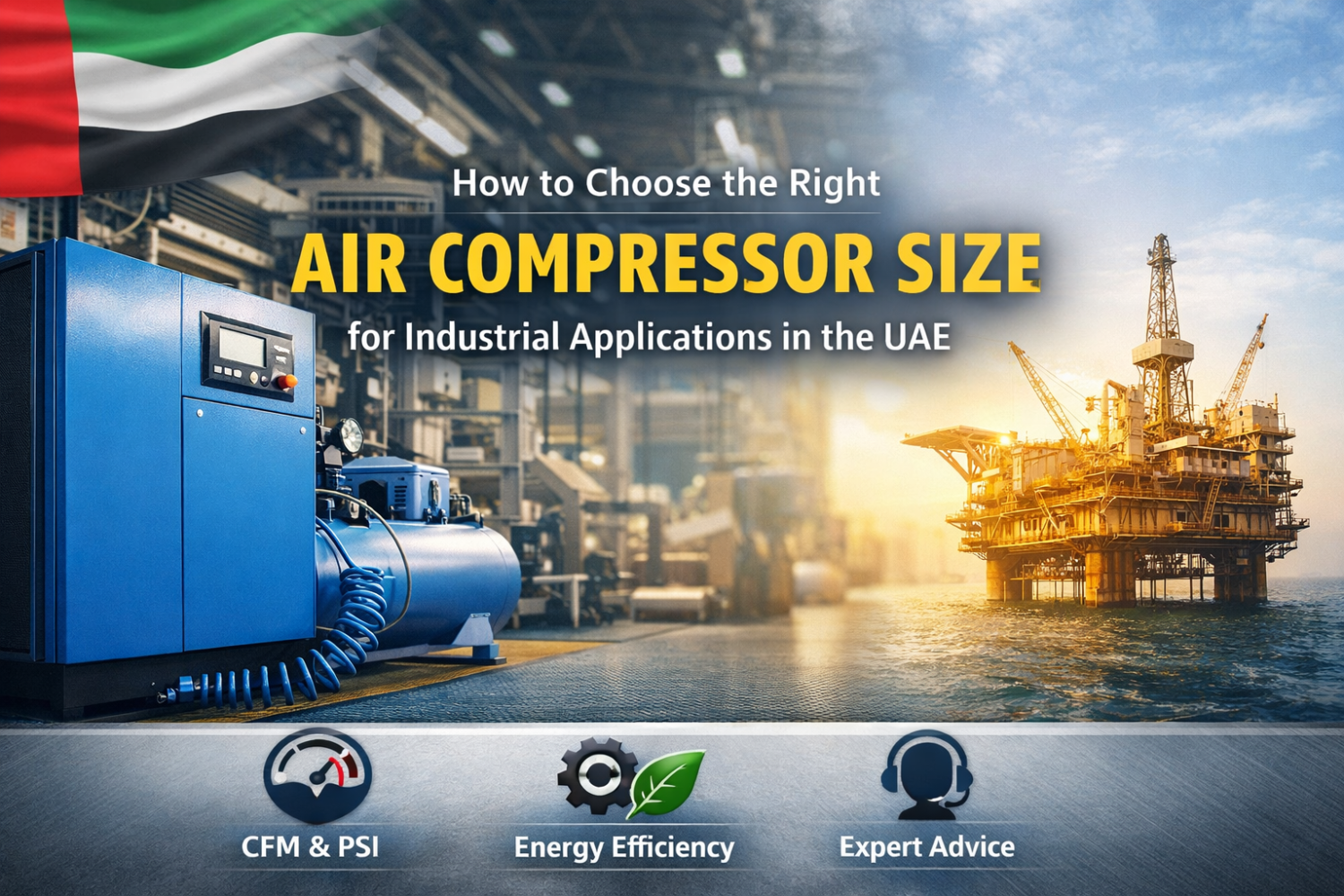
Selecting the right air compressor is critical for industrial operations in the UAE. An improperly sized compressor can lead to inefficiency, increased energy costs, and equipment downtime, while the right choice ensures smooth operations, optimal productivity, and cost savings. This guide will help industrial facility managers, engineers, and procurement teams understand how to choose the ideal air compressor size tailored to their specific needs.
Understanding Industrial Air Compressor Basics
Air compressors convert power into potential energy stored in pressurized air. In industrial applications, they power tools, machinery, and automated systems. Key factors that influence compressor performance include air pressure (measured in PSI), airflow rate (measured in CFM), and duty cycle. Choosing the wrong compressor size can result in frequent shutdowns or excessive energy consumption.
Did you know? According to a 2023 report by the UAE Energy Authority, industrial facilities in the region spend up to 15% of their energy budget on inefficient air compressor systems.
Assess Your Air Demand
The first step in selecting the right air compressor size is calculating your facility’s total air demand. This involves:
- Listing all air-powered equipment and their CFM requirements.
- Estimating peak usage by determining which machines run simultaneously.
- Factoring in future expansion to avoid frequent upgrades.
This ensures your compressor can handle peak loads without strain.
Determine Required Pressure
Industrial equipment requires specific PSI levels to operate efficiently. Common pressures in UAE industries range from 90 to 150 PSI. Ensure your selected compressor can maintain this pressure consistently, even at peak demand. Over-pressurizing equipment not only wastes energy but can also reduce the lifespan of your tools.
Choose the Right Compressor Type
There are several air compressor types, each suited to different industrial applications:
- Rotary Screw Compressors: Ideal for continuous operation in manufacturing plants.
- Piston (Reciprocating) Compressors: Best for intermittent use or small workshops.
- Centrifugal Compressors: Suitable for very high-capacity requirements.
Consider your facility’s operational pattern, space availability, and maintenance capacity before choosing a type.
Factor in Energy Efficiency and Maintenance
Energy-efficient compressors reduce operating costs and support sustainable industrial practices. Look for features like variable speed drives (VSD) and advanced control systems. Regular maintenance is also crucial: filters, oil, and belts should be checked according to manufacturer guidelines to ensure optimal performance.
Consult Industry Experts
Finally, consult with local suppliers and engineers to validate your calculations. UAE-based industrial suppliers can provide insights into equipment best suited for the region’s climate, energy tariffs, and operational requirements.
Conclusion
Choosing the right air compressor size is not just about meeting your current production needs—it’s about ensuring long-term efficiency, safety, and cost savings. By carefully assessing your air demand, pressure requirements, and compressor type, you can optimize industrial operations and prevent costly downtime.