






Traffic congestion is a growing challenge in urban areas worldwide. To manage traffic efficiently and improve road safety, modern transportation systems rely heavily on intelligent sensing technologies. One of the most widely used and reliable traffic detection technologies is the traffic loop detector. This article explains what traffic loop detectors are, how they work, their types, benefits, and real-world applications.
What Is a Traffic Loop Detector?
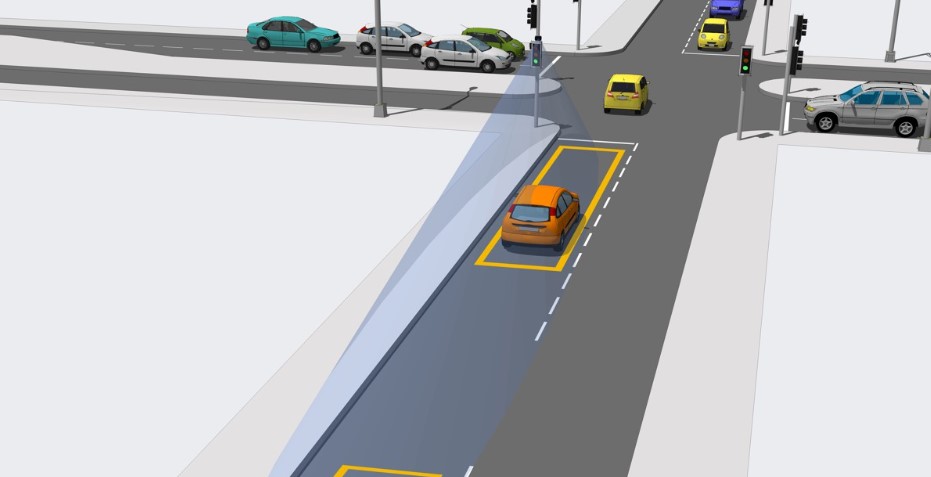
A traffic loop detector is a vehicle detection system embedded into the road surface to monitor traffic flow. It detects the presence, movement, and sometimes speed of vehicles by sensing changes in electromagnetic fields when a vehicle passes over or stops above the loop.
These detectors are commonly installed at traffic signals, intersections, parking entrances, toll plazas, and highway ramps to control signals and collect traffic data.
How Traffic Loop Detectors Work
Traffic loop detectors operate using inductive loop technology. The system consists of three main components:
-
Inductive Loop Wire
A loop of insulated wire is installed in a saw-cut slot in the pavement and sealed with durable material. -
Loop Detector Unit
This electronic device is installed in a nearby control cabinet and connected to the loop wire. -
Traffic Controller
The controller uses data from the detector to manage traffic signals or collect traffic statistics.
Working Principle
-
The loop wire creates an electromagnetic field.
-
When a vehicle (metal object) passes over the loop, it disrupts the magnetic field.
-
This change is detected by the loop detector unit.
-
The system then signals the traffic controller to take action, such as changing a traffic light or recording vehicle data.
Types of Traffic Loop Detectors
Traffic loop detectors are available in several types, depending on application and installation needs:
1. Single Inductive Loop Detector
-
Detects the presence of vehicles
-
Commonly used at intersections and parking gates
2. Dual Loop Detector
-
Uses two loops placed at a fixed distance
-
Measures vehicle speed, length, and direction
3. Quadrupole Loop Detector
-
Reduces sensitivity to adjacent lane interference
-
Improves accuracy in multi-lane roads
4. Temporary Loop Detectors
-
Used for short-term traffic studies
-
Easier to install and remove
Applications of Traffic Loop Detectors
Traffic loop detectors play a vital role in intelligent transportation systems (ITS). Common applications include:
-
Traffic signal control at intersections
-
Vehicle counting and traffic volume analysis
-
Speed and occupancy measurement
-
Parking management systems
-
Toll collection and access control
-
Ramp metering on highways
Benefits of Traffic Loop Detectors
Using traffic loop detectors offers several advantages:
🚦 Improved Traffic Flow
Optimizes traffic light timing based on real-time vehicle presence.
📊 Accurate Traffic Data
Provides reliable data for traffic planning and infrastructure development.
🛣 Enhanced Road Safety
Reduces unnecessary stops and congestion, lowering accident risk.
💰 Cost-Effective Technology
Low maintenance costs compared to many advanced sensing systems.
⚙ Proven and Reliable
Decades of use with consistent performance in various weather conditions.
Limitations of Traffic Loop Detectors
Despite their advantages, traffic loop detectors have some limitations:
-
Installation requires road cutting, which can disrupt traffic
-
Maintenance can be costly if pavement is damaged
-
Less flexible compared to wireless or camera-based sensors
However, with proper installation and maintenance, these issues can be minimized.
Traffic Loop Detectors vs. Modern Traffic Sensors
| Feature | Loop Detectors | Video Sensors | Radar Sensors |
|---|---|---|---|
| Accuracy | High | Medium | High |
| Weather Impact | Low | High | Low |
| Installation | In-road | Pole-mounted | Pole-mounted |
| Maintenance | Moderate | Low | Low |
Loop detectors remain a preferred choice where accuracy and reliability are critical.
Future of Traffic Loop Detection
Although newer technologies like AI cameras and radar sensors are gaining popularity, traffic loop detectors continue to be widely used. Advances in durable materials, smart controllers, and hybrid traffic systems are extending their lifespan and improving performance. In many smart city projects, loop detectors are integrated with modern traffic management platforms for enhanced efficiency.
Conclusion
Traffic loop detectors are a cornerstone of modern traffic management systems. Their accuracy, reliability, and cost-effectiveness make them an essential tool for managing traffic flow, reducing congestion, and improving road safety. While newer technologies are emerging, traffic loop detectors remain a trusted and proven solution in intelligent transportation systems worldwide.