


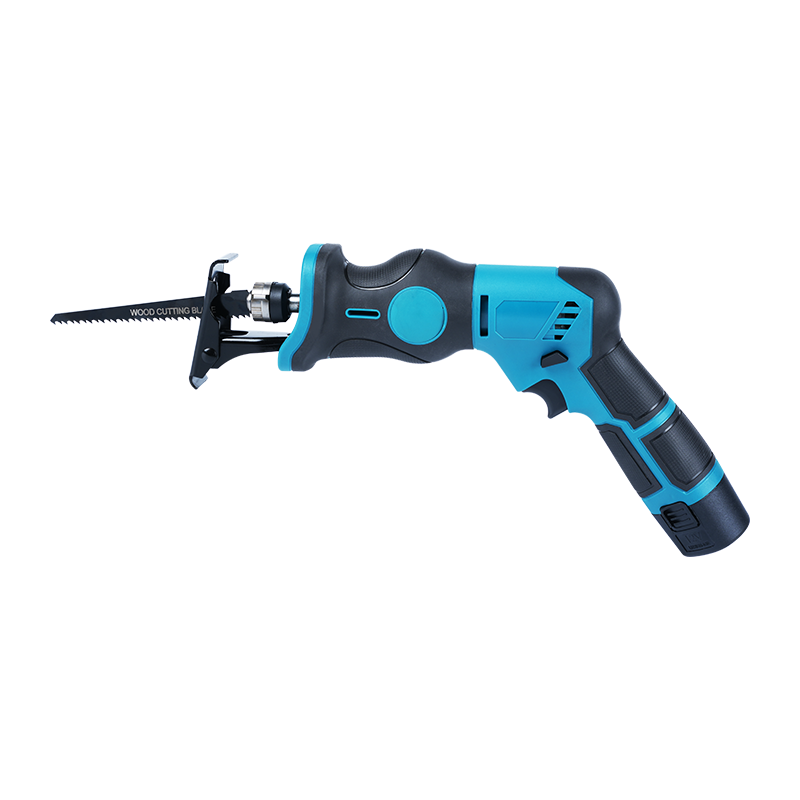
A Lithium Reciprocating Saw is deployed for a wide array of cutting tasks across different trades and projects. Its primary role is in demolition, where it excels at cutting through nailed wood, such as in wall framing, deck removal, or pruning tree limbs. Plumbers and electricians use it to make quick cut-outs in drywall or subflooring, while metalworkers employ specialized blades to cut conduit, pipes, or sheet metal. The tool's ability to make plunge cuts into flat surfaces further expands its utility for creating openings without a starter hole.
The cordless nature of a Lithium Reciprocating Saw is transformative in many scenarios. It allows for work in attics, crawl spaces, on rooftops, or in remote areas of a property without the need for long extension cords or generators. For emergency services or disaster recovery, it provides a crucial capability for rapid cutting in unstable environments. Landscapers use it for flush-cutting stumps or trimming branches in tight spaces where a chainsaw is unsuitable.
Selecting the right tool involves matching its power and features to the intended use. For frequent heavy-duty work, a brushless motor and a high-volt battery system offer sustained power and durability. For occasional use, a compact model may be sufficient. The broad utility and cordless convenience of a Lithium Reciprocating Saw solidify its status as a fundamental and versatile power tool for tackling diverse cutting challenges in dynamic work environments.