






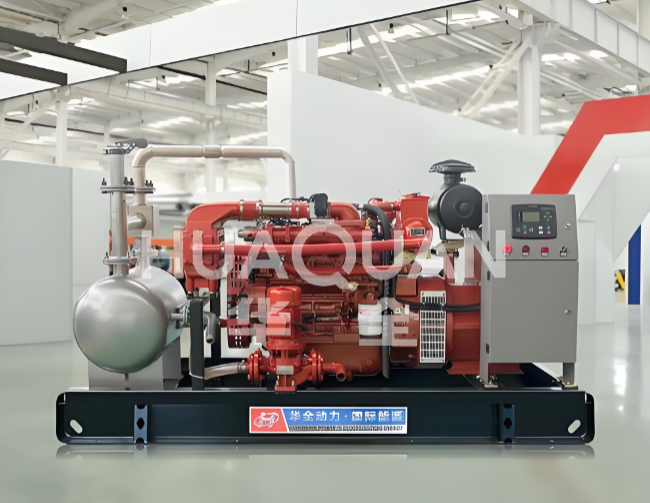
Natural gas generators are widely used for dependable backup and continuous power in both residential and commercial environments. From protecting homes during outages to keeping businesses operational during grid failures, these systems offer reliability, cleaner combustion, and convenient fuel supply through existing gas lines. However, one of the most important aspects of generator ownership is understanding fuel consumption.
A natural gas generator fuel consumption calculator provides a simple and accurate way to estimate how much gas your system will use — and how much it will cost to operate. Whether you’re a homeowner planning for emergencies or a facility manager managing operational budgets, a fuel consumption calculator is an essential planning tool.
Why Fuel Consumption Estimation Matters
Fuel consumption directly affects:
- Monthly and annual operating costs
- Emergency preparedness planning
- Gas line sizing and infrastructure
- Generator sizing decisions
- Long-term return on investment
Without accurate estimates, you may underestimate costs or overestimate runtime capabilities. A free calculator eliminates guesswork and allows you to make informed decisions before purchasing or operating a generator.
How a Natural Gas Generator Fuel Consumption Calculator Works
A fuel consumption calculator estimates gas usage based on several core inputs:
- Generator size (kW rating)
- Load percentage (how much power you are using)
- Operating hours
- Local natural gas price
Most generator manufacturers provide fuel consumption data in cubic feet per hour (CFH) or therms per hour at different load levels (25%, 50%, 75%, 100%).
The calculator applies a straightforward formula:
Total Fuel Used = Hourly Consumption × Runtime
Operating Cost = Total Fuel Used × Fuel Price
With a free calculator, this math is done instantly, often with additional features such as monthly and annual cost projections.
Residential Applications
For homeowners, natural gas generators are typically used as standby backup systems. These systems automatically activate during power outages, keeping essential appliances running — including HVAC systems, refrigerators, medical devices, and lighting.
Example: Residential Standby Generator
Suppose you own a 20 kW natural gas generator. According to manufacturer specifications:
- 50% load: 205 cubic feet per hour
- 100% load: 315 cubic feet per hour
If your average outage load is approximately 60% and you experience a 10-hour outage:
Estimated hourly consumption: 240 cubic feet
Total gas used: 240 × 10 = 2,400 cubic feet
Since 1 therm equals 100 cubic feet:
2,400 ÷ 100 = 24 therms
If natural gas costs $1.40 per therm:
24 × $1.40 = $33.60
A free fuel calculator provides this result immediately, allowing homeowners to plan emergency fuel costs accurately.
Commercial Applications
Commercial facilities often operate larger generators for:
- Data centers
- Retail stores
- Healthcare clinics
- Manufacturing facilities
- Office buildings
In these environments, fuel consumption impacts operational budgets significantly.
Example: Small Commercial Facility
Consider a 60 kW generator running at 75% load for 12 hours during a grid outage.
If consumption is 600 cubic feet per hour:
600 × 12 = 7,200 cubic feet
7,200 ÷ 100 = 72 therms
At $1.25 per therm:
72 × $1.25 = $90 per day
If outages occur multiple times annually, or if the generator is used for peak shaving, costs accumulate quickly. A calculator allows businesses to forecast these expenses with precision.
Benefits of Using a Free Calculator
1. Budget Planning
Fuel costs can vary widely depending on usage. A calculator helps homeowners and businesses create accurate operating budgets.
2. Generator Sizing Decisions
Oversized generators consume more fuel even at partial loads. Undersized generators struggle under heavy demand. A fuel consumption calculator helps compare different kW ratings to find the most cost-efficient solution.
3. Load Management Optimization
Running a generator at optimal load improves fuel efficiency. Calculators allow users to test multiple load scenarios and identify the most economical operating point.
4. Emergency Preparedness
Knowing expected fuel consumption helps estimate how long a natural gas supply can sustain operation during extended outages.
5. Long-Term Cost Analysis
Free calculators often provide monthly or yearly projections, helping users understand lifetime operating costs — not just upfront equipment expenses.
Factors That Affect Fuel Consumption
While calculators provide estimates, several real-world factors influence actual fuel usage:
Generator Efficiency
Newer generators typically have better combustion efficiency and improved fuel management systems.
Load Variability
Fluctuating power demand increases fuel usage compared to steady loads.
Ambient Conditions
Temperature, humidity, and altitude can affect engine performance and fuel consumption.
Maintenance Condition
Poor maintenance reduces efficiency and increases fuel use.
Gas Quality
Variations in natural gas energy content can slightly alter consumption rates.
For maximum accuracy, always use manufacturer-provided fuel data when inputting values into a calculator.
Comparing Natural Gas to Other Fuel Options
Natural gas generators are often compared to diesel and propane systems. Key advantages include:
- Continuous pipeline supply (no refueling logistics)
- Lower emissions
- Reduced fuel storage risks
- Cleaner combustion
However, diesel generators may offer higher energy density and are sometimes preferred for industrial-scale operations. A fuel consumption calculator enables side-by-side cost comparisons to determine the most economical solution for your specific needs.
Understanding Units of Measurement
Fuel consumption may be displayed in several formats:
- Cubic feet per hour (CFH)
- Therms per hour
- Cubic meters per hour (international markets)
Since natural gas pricing is often based on therms, many free calculators automatically convert cubic feet into therms for cost calculation.
1 therm = 100 cubic feet
1 cubic meter ≈ 35.3 cubic feet
Accurate unit conversion ensures reliable financial projections.
Monthly and Annual Cost Projections
One of the biggest advantages of using a free fuel consumption calculator is long-term forecasting.
For example:
If your generator consumes $30 in fuel per 10-hour outage and you experience five outages annually:
$30 × 5 = $150 per year
If used for routine testing (1 hour per week at $3 per hour):
$3 × 52 weeks = $156 annually
Total yearly fuel cost: $306
Over 10 years, that equals $3,060 in fuel expenses.
These projections help homeowners and businesses evaluate total cost of ownership.
Choosing the Right Free Calculator
When selecting a free natural gas generator fuel consumption calculator, look for features such as:
- Adjustable load percentage
- Automatic unit conversions
- Custom fuel pricing input
- Monthly and annual cost breakdown
- Mobile-friendly interface
- Printable results for budgeting reports
Advanced calculators may even allow comparison between multiple generator sizes.
Best Practices for Accurate Estimates
To ensure reliable calculations:
- Use manufacturer fuel consumption charts
- Estimate realistic load conditions
- Include routine maintenance test runs
- Verify current local gas pricing
- Factor in seasonal demand changes
Accurate inputs produce accurate projections.
Final Thoughts
A free natural gas generator fuel consumption calculator is a powerful yet simple tool for both residential and commercial users. It provides instant insights into fuel usage, operating expenses, and long-term financial planning.
For homeowners, it offers peace of mind by clarifying emergency costs. For businesses, it supports strategic budgeting and operational efficiency. By understanding fuel consumption before running or purchasing a generator, you eliminate uncertainty and gain full control over energy planning.
Reliable power is essential — but smart power management starts with accurate cost estimation. A free fuel consumption calculator gives you the numbers you need to make confident, informed decisions.