




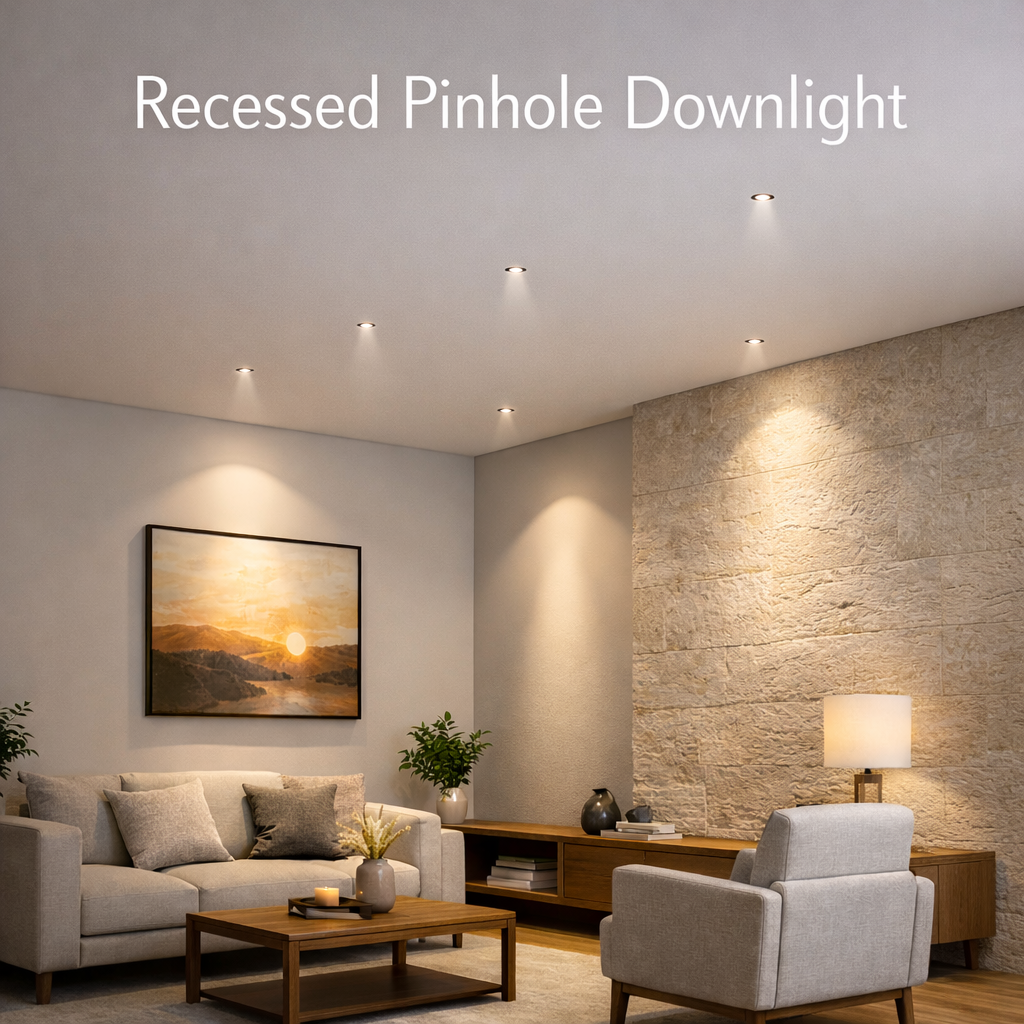
A recessed pinhole downlight is a small ceiling light with a tiny visible opening. It gives a narrow and soft beam of light. It is used when you want a clean look and focused lighting.
This guide explains how it works, why people choose it, and how to buy the right one.
What Is a Recessed Pinhole Downlight?
A recessed pinhole downlight is a light that sits inside the ceiling. Only a small round hole can be seen from below.
Simple Definition
- Recessed means it is fixed inside the ceiling.
- Pinhole means the light opening is very small.
- Downlight means it shines light downward.
The small opening helps control glare. Glare is harsh light that hurts your eyes.
Real-Life Example
Think about an art gallery. The ceiling looks clean. You do not see big lights. But the painting on the wall is bright. That soft and focused light often comes from this type of fixture.
Why Do People Choose This Type of Light?
Many homes and shops use this light for one main reason: clean design.
1. Modern Look
The ceiling looks flat and neat. There are no bulky light fixtures.
2. Focused Light
The beam is narrow. It lights only one area, like:
- A painting
- A kitchen counter
- A hallway
- A display shelf
3. Less Glare
The deep and small opening hides the bright LED chip. This makes the light soft on the eyes.
Why the Lighting Problem Exists
Many rooms have bad lighting. Here is why:
Too Much Open Light
Big lights spread light everywhere. This can:
- Create glare
- Wash out wall colors
- Make rooms feel flat
Poor Beam Control
Standard downlights have wide beams. They light the floor, walls, and eyes at the same time.
Design Clutter
Large fixtures break the smooth ceiling look. This can ruin a modern interior style.
How This Solution Works
A recessed pinhole downlight solves these problems with smart design.
Deep Set LED
The LED chip sits deep inside the housing. This blocks side glare.
Narrow Beam Angle
Beam angle means how wide the light spreads.
- 15°–24° = narrow beam
- 36°+ = wide beam
Most pinhole models use narrow beams. This keeps light focused.
Trim Design
The trim is the visible ring. In this light, the trim is small and thin. This gives a minimal look.
Who Is This Lighting Best For?
This type of light is not for every space. It works best for:
1. Homeowners Who Like Clean Design
If you love simple ceilings, this is a good choice.
2. Interior Designers
Designers use it in:
- Luxury living rooms
- Bedrooms
- Hotel lobbies
- Showrooms
3. Retail Stores
Stores use focused light to highlight products.
4. Offices and Workspaces
It works well in meeting rooms and reception areas.
Key Benefits
Here are the main benefits explained in simple terms.
• Clean Ceiling Look
Only a small dot is visible.
• Soft and Comfortable Light
Less glare means less eye strain.
• Good for Accent Lighting
Accent lighting means lighting used to highlight something.
Examples:
- A wall texture
- A sculpture
- A kitchen island
• Energy Saving
LED lights use less power than old bulbs.
• Long Life
Most LED models last many years.
Common Mistakes People Make
Buying the wrong light can cause problems. Here are common mistakes.
1. Choosing the Wrong Beam Angle
If the beam is too narrow:
- The room will feel dark.
If too wide:
- The effect is lost.
2. Installing Too Few Lights
These lights focus on small areas. You may need more units than normal downlights.
3. Ignoring Ceiling Height
In high ceilings, narrow beams may not reach well. In low ceilings, spacing must be careful.
4. Not Checking Color Temperature
Color temperature affects mood.
- 2700K–3000K = warm light
- 4000K = cool white
Warm light is good for homes. Cool white fits offices.
5. Mixing With Harsh Main Lighting
If your main light is too bright, the effect disappears.
Safety Tips and Warnings
Lighting must be safe.
Electrical Safety
- Always turn off power before installation.
- Use a certified electrician if unsure.
Heat Management
LED lights still produce some heat. Make sure there is space above the ceiling.
Fire Rating
In some homes, fire-rated fittings are needed. Check local building rules.
Moisture Areas
For bathrooms, choose proper IP rating. IP rating shows water protection level.
Cost and Pricing Guide
Prices vary by quality and brand.
Basic Range
- Lower price
- Simple design
- Shorter warranty
Mid-Range
- Better light control
- Longer lifespan
- More finish options
High-End Models
- Strong housing
- Advanced glare control
- Premium LED chips
Installation cost depends on:
- Ceiling type
- Wiring condition
- Number of lights
Always plan your layout before buying.
Best Placement Tips
Good placement makes a big difference.
Living Room
- Place lights 60–90 cm from the wall.
- Aim at artwork or textures.
Kitchen
- Install above the counter.
- Avoid shadow areas.
Hallway
- Space evenly.
- Keep consistent alignment.
Bedroom
- Use near wardrobes or feature walls.
- Avoid direct light above the bed.
Prevention and Maintenance Tips
LED lights need little care. But some steps help.
1. Keep It Clean
Dust reduces brightness. Wipe gently with a dry cloth.
2. Check Wiring Yearly
Loose wiring can cause flicker.
3. Replace in Sets
If one light fails after many years, others may follow.
4. Avoid Overloading Circuits
Too many lights on one circuit can cause issues.
When to Seek Professional Help
You should call a professional if:
- Lights flicker often
- Breaker trips after installation
- Ceiling gets too hot
- You smell burning
Also seek help if you plan a large layout. A lighting designer can calculate spacing and beam angles.
How to Choose the Right Model
Follow these steps.
Step 1: Decide the Purpose
Is it for accent or general lighting?
Step 2: Measure Ceiling Height
This helps choose beam angle.
Step 3: Pick the Right Color Temperature
Warm for homes. Cool for work areas.
Step 4: Check Cut-Out Size
The cut-out is the hole size in the ceiling. Measure carefully.
Step 5: Compare Quality
Look at:
- Warranty
- Material
- Heat design
A good recessed pinhole downlight should have solid housing and stable light output.
Limitations to Know
This light is not perfect for all uses.
- Not ideal as the only light source in big rooms
- Needs correct spacing
- Can cost more than basic downlights
- Installation may require ceiling cutting
Understanding these limits helps avoid regret.
Expert Insight
As lighting experts often explain, layered lighting works best.
Layered lighting means using:
- Main light
- Accent light
- Task light
This type of fixture works best as accent lighting. It adds depth and style.
Companies like Nuordic Lighting Company often suggest mixing it with soft indirect lighting for balance.
Soft Recommendation
If you are planning a new interior or renovation, study your layout first. Make a simple lighting plan. Test beam angles if possible.
A quality recessed pinhole downlight will give better glare control and cleaner design. But always match it with the room size and purpose.
Do not rush your decision.
Conclusion
A recessed pinhole downlight is a smart choice for clean and focused lighting. It reduces glare and improves design. When chosen and installed correctly, it creates depth and comfort in any space. Good planning and quality products make the biggest difference.
FAQs
What is a recessed pinhole downlight used for?
It is used for focused accent lighting in homes, shops, and offices.
Is it good for general room lighting?
No, it works best as accent or highlight lighting.
Does it save energy?
Yes, LED versions use less power than old bulbs.
How many lights do I need?
It depends on room size, beam angle, and ceiling height.
Can I install it myself?
You can, but a licensed electrician is safer for wiring work.