

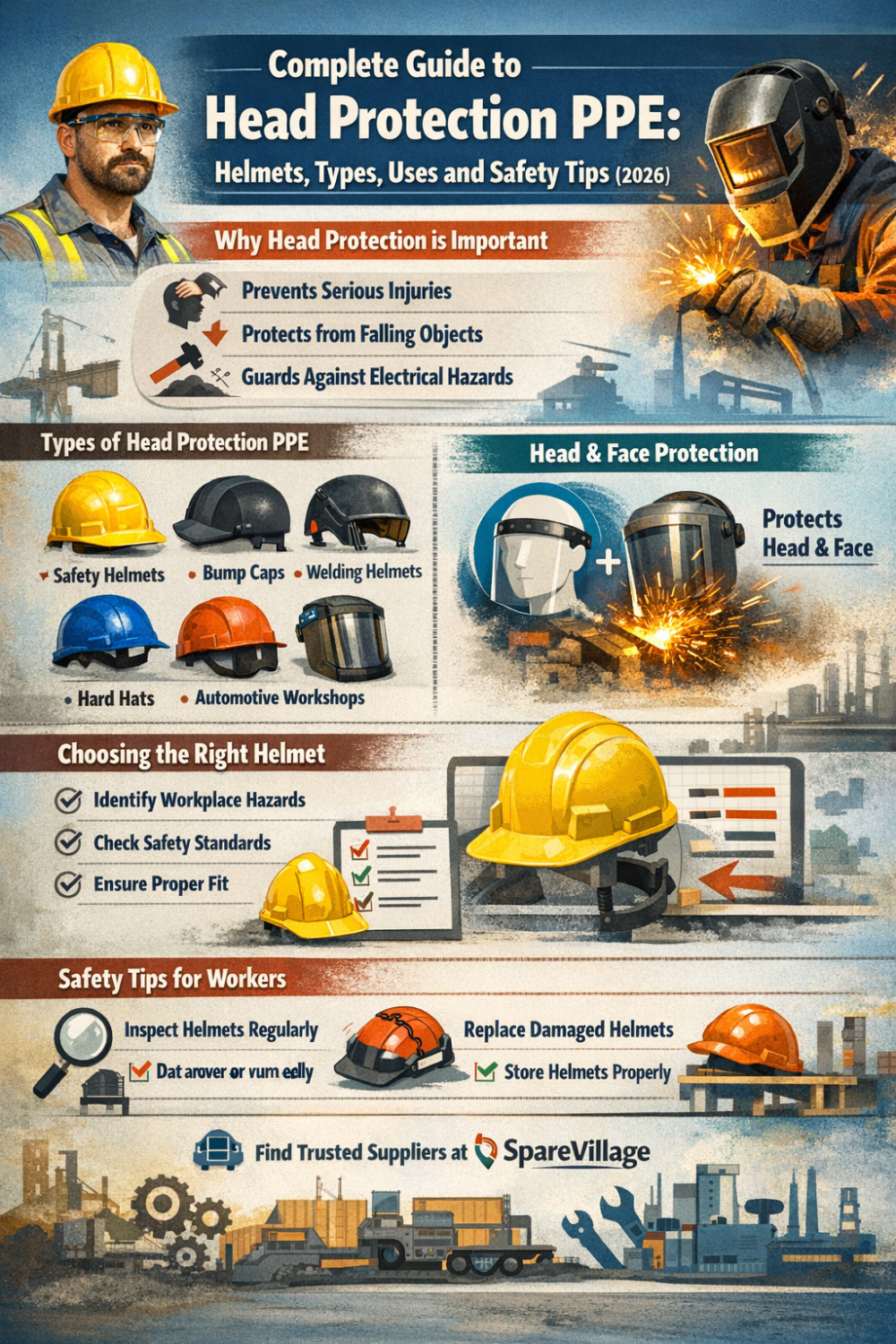
Head protection is one of the most important parts of personal protective equipment (PPE). In many workplaces such as construction sites, factories, warehouses, mining areas, and workshops, workers face risks from falling objects, sharp materials, and accidental impacts.
Head protection PPE helps prevent serious injuries and protects workers from accidents that can cause permanent damage.
In this guide, you will learn:
- What head protection is
- Why head protection helmets are important
- Types of head protection PPE
- Difference between head and face protection
- Where head protection is used
- How to choose the right helmet
- Safety tips for workers
This guide is written for beginners so anyone can easily understand it.
What Is Head Protection?
Head protection is safety equipment designed to protect a worker’s head from injuries caused by:
- Falling objects
- Flying debris
- Electrical hazards
- Impact with hard surfaces
- Chemical splashes
- Heat or sparks
The most common type of head protection is a safety helmet, also called a hard hat.
Workers in industries like construction, manufacturing, oil and gas, welding, and engineering must wear head protection to reduce the risk of serious accidents.
Without proper head protection PPE, even a small falling object can cause severe injury.
Why Head Protection PPE Is Important
Many workplace accidents happen because workers do not use proper protective equipment.
Using the right head protection PPE helps prevent:
- Skull fractures
- Brain injuries
- Cuts and head wounds
- Electrical shocks
- Burns and chemical injuries
Benefits of Head Protection
- Protects from falling tools and materials
- Reduces impact injuries
- Protects from electrical hazards
- Improves workplace safety compliance
- Required by many safety regulations
Companies that provide proper head protection helmets protect both their workers and their business.
What Is a Head Protection Helmet?
A head protection helmet is a safety helmet designed to protect the head from impacts and hazards in the workplace.
It usually has two main parts:
- Outer Shell
A strong hard plastic shell that absorbs impact. - Suspension System
Straps inside the helmet that absorb shock and keep the helmet comfortable.
This design spreads the impact force and reduces injury.
Types of Head Protection PPE
Different industries require different types of protection. Below are the common types of head protection PPE used in workplaces.
- Safety Helmets (Hard Hats)
These are the most common head protection helmets used in construction and industrial work.
They protect workers from:
- Falling objects
- Impact injuries
- Electrical hazards
Hard hats are widely used in:
- Construction sites
- Industrial plants
- Warehouses
- Engineering projects
- Bump Caps
Bump caps protect workers from minor head bumps in tight spaces.
They are used in places like:
- Warehouses
- Automotive workshops
- Maintenance areas
They are lighter than hard hats but provide less protection.
- Welding Helmets
Welding helmets are designed for workers who perform welding tasks.
They protect the head and face from:
- Sparks
- Intense light
- Heat
- Metal splashes
This type of equipment is an example of head and face protection.
- Face Shields
Face shields protect the entire face from hazards such as:
- Flying particles
- Chemical splashes
- Grinding sparks
They are often used with safety helmets for complete head and face protection.
- Firefighter Helmets
Firefighters use special helmets designed to resist:
- Extreme heat
- Flames
- Falling debris
These helmets provide strong protection in dangerous environments.
What Is Head and Face Protection?
Head and face protection refers to safety equipment that protects both the head and the face from hazards.
Examples include:
- Welding helmets
- Face shields
- Helmets with visors
- Chemical protection shields
Workers in industries such as welding, grinding, chemical handling, and construction often require this combined protection.
Using proper head and face protection reduces the risk of eye injuries, burns, and facial damage.
Industries That Require Head Protection
Many industries require workers to wear head protection PPE.
Common industries include:
- Construction
- Manufacturing
- Oil and gas
- Mining
- Warehousing
- Metal fabrication
- Electrical maintenance
- Chemical plants
Workers in these industries face daily hazards, so using proper head protection helmets is essential.
How to Choose the Right Head Protection Helmet
Choosing the right helmet is important for safety and comfort.
Follow these steps when selecting a head protection helmet.
Step 1: Identify Workplace Hazards
First, understand the type of risks in the workplace.
For example:
- Falling objects
- Electrical hazards
- Sparks and heat
- Chemical splashes
This helps you choose the correct head protection PPE.
Step 2: Choose the Right Helmet Type
Different helmets protect against different hazards.
Examples:
- Construction → Hard hats
- Welding → Welding helmets
- Chemical handling → Face shields
- Electrical work → Insulated helmets
Step 3: Check Safety Standards
Always choose helmets that meet safety standards such as:
- Industrial safety certifications
- Impact resistance standards
Certified helmets provide better protection.
Step 4: Ensure Proper Fit
A helmet must fit properly to protect the head.
A good helmet should:
- Sit comfortably on the head
- Not move easily
- Have adjustable straps
A loose helmet may not protect properly during an accident.
Step 5: Buy from Trusted Suppliers
Always buy safety equipment from reliable suppliers.
Industrial platforms like SpareVillage help businesses find verified suppliers of:
- Head protection helmets
- Industrial safety equipment
- PPE products
- Tools and machinery
This makes it easier for companies and MSMEs to purchase high-quality safety equipment.
Safety Tips for Using Head Protection PPE
Using safety equipment correctly is just as important as buying it.
Follow these tips when using head protection PPE.
Always inspect the helmet
Check for:
- Cracks
- Damage
- Loose straps
Replace damaged helmets immediately.
Wear the helmet properly
Do not:
- Wear helmets backward unless designed that way
- Remove suspension straps
- Modify the helmet
Improper use reduces protection.
Replace helmets regularly
Safety helmets should be replaced if they:
- Experience heavy impact
- Show signs of wear
- Are several years old
Old helmets may lose their strength.
Store helmets correctly
Keep helmets away from:
- Direct sunlight
- Chemicals
- Extreme heat
Proper storage increases helmet lifespan.
How Businesses Can Improve Workplace Safety
Companies can improve safety by taking these steps.
Provide proper PPE
Employers should provide:
- Head protection helmets
- Face shields
- Safety goggles
- Gloves and protective clothing
Train workers
Workers should learn:
- How to wear helmets correctly
- When to replace PPE
- How to identify safety risks
Buy quality equipment
Businesses should buy industrial safety products from trusted platforms like SpareVillage, which connects MSMEs with verified suppliers of:
- Industrial PPE
- Tools and machinery
- Spare parts
- Safety equipment
This ensures businesses get reliable products for workplace safety.
Common Mistakes When Using Head Protection
Many workers make mistakes when using safety helmets.
Avoid these common mistakes.
Wearing damaged helmets
A cracked helmet cannot protect properly.
Not adjusting the suspension
Loose helmets can fall off during accidents.
Ignoring face protection
Some tasks require head and face protection, not just helmets.
Using old helmets
Old helmets lose their protective strength over time.
Frequently Asked Questions (FAQs)
What is head protection PPE?
Head protection PPE is safety equipment designed to protect the head from impacts, falling objects, and workplace hazards. Examples include safety helmets, hard hats, and face shields.
What is the purpose of a head protection helmet?
A head protection helmet protects workers from injuries caused by falling objects, impacts, and electrical hazards in industrial environments.
What is the difference between head protection and head and face protection?
Head protection protects the skull from impacts.
Head and face protection protects both the head and the face from hazards such as sparks, chemicals, and flying particles.
Who needs head protection PPE?
Workers in industries such as construction, manufacturing, mining, welding, and engineering need head protection PPE to prevent serious injuries.
Where can businesses buy head protection equipment?
Businesses can purchase head protection helmets and industrial PPE from trusted industrial marketplaces like SpareVillage, which connects MSMEs with verified suppliers across India.
Final Thoughts
Workplace safety should always be a top priority. Proper head protection PPE helps protect workers from serious injuries and improves overall workplace safety.
Using the right head protection helmet and proper head and face protection can prevent many accidents in industries like construction, manufacturing, and engineering.
Businesses should always invest in high-quality safety equipment and purchase from reliable platforms such as SpareVillage, where companies can find trusted suppliers of industrial tools, machinery, spare parts, and PPE products.