




If your landlord is trying to charge you a pet deposit for your emotional support animal, you are not alone. This is one of the most common disputes between tenants and property managers across the country. The good news is that under the Fair Housing Act (FHA), emotional support animals (ESAs) are not considered pets. They are recognized as assistance animals that provide support for a person with a disability. Because of this distinction, housing providers cannot charge pet deposits, pet rent, or additional pet fees when a tenant has a valid ESA letter from a licensed mental health professional.
The FHA requires landlords to provide reasonable accommodations to tenants with disabilities, which includes allowing an ESA even in “no-pet” properties. While landlords can still charge for actual damage caused by the animal, they cannot demand upfront pet-related fees simply because the animal lives in the unit. Understanding your rights under federal law can help you avoid unnecessary costs and ensure you are treated fairly in your housing situation.
Why ESAs Are Not Treated as Pets Under the Law
Most of the confusion starts here. Property managers see an animal, they see their lease's no-pet clause, and they reach for the pet deposit form. What they often overlook is that emotional support animals occupy a completely different legal category than household pets.
Under the Fair Housing Act, emotional support animals are considered assistance animals, not pets. That single distinction carries significant weight. Assistance animals are part of a reasonable accommodation for someone with a qualifying mental or emotional disability. Because of this, standard pet policies, breed restrictions, size limits, and associated fees simply do not apply.
The key differences between a pet and an ESA under housing law:
|
Category |
Regular Pet |
Emotional Support Animal |
|
Legal Classification |
Property / Pet |
Assistance Animal |
|
Pet Deposit |
Allowed |
Not Allowed |
|
Monthly Pet Fees |
Allowed |
Not Allowed |
|
No-Pet Policy Override |
No |
Yes (with valid ESA letter) |
|
Breed/Size Restrictions |
Allowed |
Not Applicable |
|
Documentation Required |
None |
Valid ESA Letter from LMHP |
What the Fair Housing Act Actually Says
The Fair Housing Act, enforced by the U.S. Department of Housing and Urban Development, prohibits housing discrimination based on disability. This includes refusing to make reasonable accommodations that allow a person with a disability to enjoy their home on equal terms with other tenants.
An emotional support animal qualifies as a reasonable accommodation when supported by documentation from a licensed mental health professional. Once that documentation is submitted, the following rules apply to your landlord or property manager:
- They cannot charge a pet deposit for the ESA
- They cannot charge monthly pet rent or additional fees related to the animal
- They cannot enforce breed or weight restrictions against the ESA
- They cannot deny the accommodation solely based on a no-pet policy
- They cannot ask about the nature or severity of your disability
The only costs you may still be responsible for are actual damages caused by the animal. If your ESA scratches the floors or damages the walls, the landlord can charge you for those repairs at move-out, just as they would for any tenant-caused damage. But a preemptive deposit is not permitted.
When Can a Landlord Refuse an ESA?
Not every housing situation is covered under the Fair Housing Act, and not every refusal is a violation. There are limited circumstances where a landlord can legally decline an ESA accommodation.
- Buildings with four or fewer units where the landlord also lives in one of those units
- Single-family homes sold or rented without a real estate broker
- Properties owned by certain religious organizations for members
- The animal poses a direct, documented threat to the health or safety of others
- The animal has a history of causing significant property damage
Outside of these specific situations, housing providers are generally required to grant the accommodation. If a landlord claims the animal is a threat, that determination must be based on the specific animal's behavior and documented evidence, not assumptions based on breed or size.
What Documentation Does Your Landlord Need?
This is where many tenants run into trouble. Some landlords will try to request far more than they are legally allowed to ask for. Others attempt to steer tenants toward paid online registries or vest certifications, none of which carry any legal weight.
Here is exactly what your landlord can and cannot request:
|
Landlord CAN Request |
Landlord CANNOT Request |
|
A valid ESA letter from a licensed mental health professional |
Your medical records or diagnosis details |
|
Confirmation that you have a disability-related need for the animal |
The specific nature or severity of your disability |
|
Information about whether the animal poses a safety threat |
Proof of training or certification for the ESA |
|
The type of animal being kept |
Payment of pet deposits or fees |
The only document that holds legal standing under federal housing law is an ESA letter written by a licensed mental health professional (LMHP). This includes therapists, psychologists, licensed clinical social workers, psychiatrists, and licensed counselors.
What Makes an ESA Letter Legally Valid for Housing
A valid emotional support animal letter is not just a note from any doctor or a certificate purchased online. For it to hold up under Fair Housing Act requirements, it needs to meet specific standards.
- Written by a licensed mental health professional currently licensed in your state
- Printed on official letterhead with the provider's credentials
- Includes the LMHP's license type, number, and contact information
- States that you have a qualifying mental or emotional health condition
- Confirms that an emotional support animal is part of your treatment or care
- Is dated and signed by the issuing professional
Online registries, vest purchases, and ID card services do not satisfy these requirements. Landlords are aware of this, and presenting fraudulent or unqualified documentation can actually harm your case rather than help it.
If you need a properly issued letter that satisfies all Fair Housing Act and HUD requirements, RealESALetter.com connects you with licensed mental health professionals in your state and provides documentation that landlords are required to accept.
What to Do if Your Landlord Still Tries to Charge a Pet Deposit
Even with a valid ESA letter in hand, some landlords push back. Whether out of ignorance or intent, being charged a pet deposit for an ESA is a situation you can address directly.
- Submit your ESA letter in writing and keep a copy for yourself
- Follow up with a written request referencing your FHA rights and the reasonable accommodation process
- Give the landlord a reasonable amount of time to review and respond
- If they continue to demand the deposit, file a complaint with HUD at hud.gov or contact a local fair housing organization
- In cases of blatant refusal, consulting a tenant rights attorney may be warranted
Filing a HUD complaint is free, and the process protects you from retaliation. Landlords who are found to have violated the Fair Housing Act can face significant fines and legal consequences.
State-Level Considerations
While federal law provides the baseline, some states have passed additional protections for ESA owners that go beyond what the Fair Housing Act requires. California, for instance, enforces Assembly Bill 468, which requires a documented relationship between you and your mental health provider before an ESA letter can be issued.
States with additional ESA housing protections or regulations include:
|
State |
Notable Rule |
|
California |
AB 468 requires 30-day clinical relationship before letter issuance |
|
Arkansas |
30-day relationship requirement before ESA documentation |
|
Iowa |
30-day prior relationship requirement |
|
Louisiana |
30-day requirement for mental health professional relationship |
|
Montana |
30-day requirement applies to all ESA letter providers |
|
All Other States |
Federal FHA standards apply; no additional waiting periods |
Understanding your specific state's requirements ensures your documentation is compliant before you submit it to your landlord. A letter that does not meet state requirements in one of the regulated states can be legally rejected, even if the underlying federal protections still apply.
Common Mistakes ESA Owners Make With Housing
Beyond the pet deposit issue, there are a few other areas where ESA owners run into preventable problems with their housing providers.
- Submitting an ESA letter from an out-of-state provider in a state that requires in-state licensure
- Using expired documentation, since most letters are valid for 12 months before renewal is recommended
- Relying on online registries or ESA certificates instead of a proper LMHP-issued letter
- Not submitting the request in writing, which creates a documentation trail
- Assuming verbal approval from a property manager is sufficient without getting written confirmation
Each of these missteps can give a landlord grounds to delay or deny your accommodation, even when you have a genuine need for your ESA.
To understand your full rights as an ESA owner under the Fair Housing Act, the Fair Housing Act guide for emotional support animals covers the details of what landlords can and cannot do, and how the law specifically protects your right to live with your animal without paying fees.
Renewing Your ESA Letter and Ongoing Housing Protection
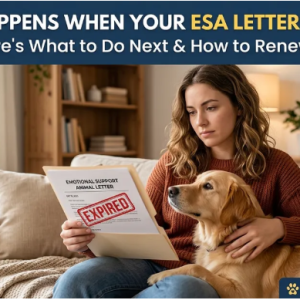
Your emotional support animal letter does not last indefinitely. Most mental health professionals issue letters that are valid for 12 months from the date of signing. After that period, landlords may request updated documentation, and having an expired letter can leave you without protection.
Renewing on time matters for a few specific reasons:
- Housing providers can legally request a current letter as part of confirming your ongoing need
- Moving to a new rental property requires fresh documentation, as your previous landlord's acceptance does not transfer
- Some states have requirements that specifically address renewal timelines and the recency of professional evaluations
Building a renewal reminder into your calendar around the same time each year keeps your housing protection continuous. A lapse in valid documentation, even a short one, can create complications during a lease renewal or a move.
Protecting Your Rights Starts With the Right Documentation
The bottom line is this: if you have a valid emotional support animal letter issued by a licensed mental health professional, your landlord has no legal grounds to charge you a pet deposit. The Fair Housing Act draws a firm line between pets and assistance animals, and charging fees for an ESA falls on the wrong side of that line.
Where many ESA owners lose ground is not in the law itself but in the documentation. A letter that does not meet the required legal standards gives a housing provider legitimate grounds to reject the accommodation, regardless of your actual need.
To make sure your documentation covers every legal requirement before you submit it to your landlord, you can start your evaluation at RealESALetter.com. Their licensed mental health professionals issue letters that are accepted nationwide and backed by a money-back guarantee if your landlord refuses a valid accommodation request.
If you still have questions about what qualifies as legitimate documentation or what your specific rights are under housing law, the
For more details on what documentation is required and what qualifies as a legitimate letter, the ESA letter FAQ covers the most common questions around landlord rights, documentation standards, and how the legal process works from start to finish.