
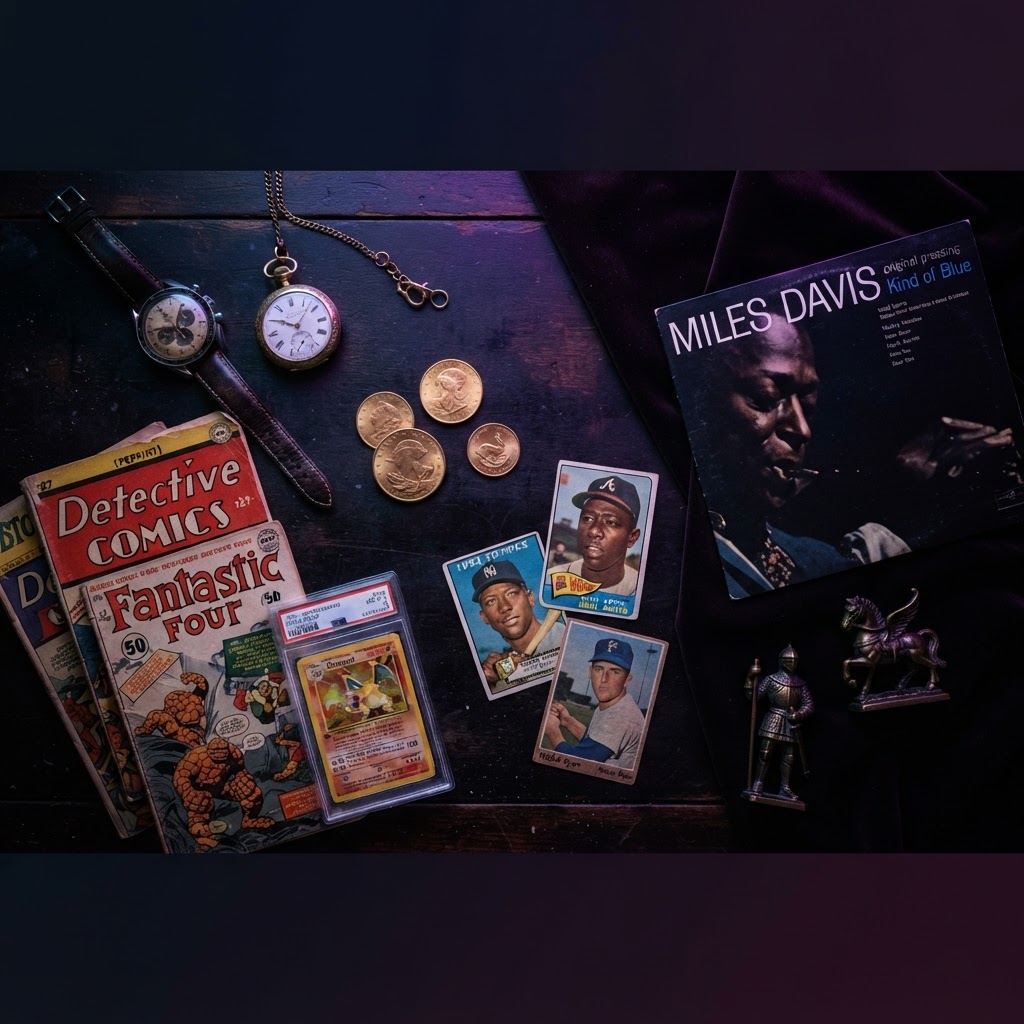
Pokémon Card Collection Management
Manage your Pokémon card collection with AI identification, market valuation, condition tracking, and provenance. Catalogue Base Set to modern era cards.
Pokémon is one of the largest collecting communities in the world, with cards spanning from the 1999 Base Set to today's Scarlet & Violet era. A serious Pokémon card collection can include thousands of cards across dozens of sets, each with different rarities, conditions, and values. MPC helps you catalogue, value, and preserve your entire Pokémon collection.
How to Catalogue Pokémon Cards
Cataloguing Pokémon cards starts with a photograph. MPC's AI identification recognizes the card from the image — the set, the Pokémon, the card number, and the rarity. You confirm the details, add the condition and grading information, and save. Whether you have a complete Base Set or a modern collection, MPC makes cataloguing fast and accurate.
What Information to Record
- •Pokémon name and card number
- •Set name and year (Base Set, Team Rocket, Scarlet & Violet, etc.)
- •Rarity (Common, Uncommon, Rare, Holo Rare, Ultra Rare, Secret Rare)
- •Card variant (Regular, Reverse Holo, Full Art, Rainbow, Alt Art)
- •Condition (Mint, Near Mint, Lightly Played, etc.)
- •Grading (PSA, BGS, CGC grade if professionally graded)
- •Purchase price, date, and source
- •Current estimated value
- •Photos (front and back)
How Condition Affects Pokémon Card Value
Condition is critical for Pokémon cards. A PSA 10 Charizard from Base Set can sell for hundreds of thousands of dollars, while the same card in PSA 7 might sell for a fraction of that. MPC lets you record the condition of every card and uses it in AI valuation. For graded cards, record the exact grade; for raw cards, use MPC's AI condition assessment as a starting point.
Tracking Pokémon Card Values
The Pokémon card market moves fast — hype cycles, set releases, and influencer attention can cause values to surge and decline. MPC's AI re-valuation keeps your values current, and the price history timeline shows when values changed. This is essential for collectors who want to understand their collection's performance.
Documenting Provenance for Pokémon Cards
Where did you get your cards? A pack pull, a trade, a purchase from a card shop, an online marketplace? Recording provenance — the source and history of each card — adds to the collection's story and can support authenticity. MPC's provenance fields let you record the source, purchase price, and date for every card.
Understanding Pokemon Card Rarity and Set Symbols
- •Identify common cards with circular icons
- •Recognize uncommon cards with diamond symbols
- •Spot rare cards featuring a star icon
- •Look for holographic patterns on rare cards
- •Check set codes located at the bottom corner
- •Understand the premium value of secret rares
Deciphering the hierarchy of Pokemon card rarity is the first step toward becoming a savvy collector or investor. Every card features a specific symbol, typically located at the bottom edge, which denotes its scarcity within a particular set release. Common cards are produced in the highest volumes, while rare cards, often marked with stars or unique holographic foil patterns, offer significant scarcity that drives market demand. Understanding the nuance between standard rares, ultra-rares, and the highly sought-after secret rares is crucial for evaluating a collection's potential worth. Additionally, promo cards and specialized event releases add another layer of complexity to rarity assessments. By familiarizing yourself with these markers, you can more accurately gauge the value of new acquisitions and better understand why certain cards sustain high market interest compared to others in your binder.
When to Grade Your Pokemon Cards
- •Grade cards with high potential for gem mint scores
- •Consider grading for valuable vintage childhood cards
- •Use grading to authenticate rare shadowless editions
- •Evaluate the cost-to-value ratio before submitting
- •Grade sets to enhance overall collection prestige
- •Submit cards only when market demand is high
Frequently Asked Questions
Can MPC identify Pokémon cards from a photo?
Yes. MPC's AI can identify Pokémon cards from a photograph, including the set, card name, card number, and rarity. You can confirm or edit any field before saving.
Can I track my entire Pokémon collection?
Yes. MPC supports unlimited items on the free tier. Whether you have 50 cards or 5,000, you can catalogue your entire collection.
How does MPC value Pokémon cards?
MPC searches current market listings — eBay sold listings, TCGPlayer prices, auction results — to estimate each card's value. You see the actual listings used, with low, mid, and high estimates and a confidence level.
Join thousands of collectors using My Premium Collection to catalogue, value, and preserve their collectibles — privately and securely.
Start Your Pokémon Card CollectionRelated Categories & Features
Trading Card Collection Management
Manage your trading card collection — Pokémon, sports cards, Magic, Yu-Gi-Oh! and more. AI identification, market valuation, condition tracking, and provenance documentation.
Learn moreSports Card Collection Management
Manage your sports card collection — baseball, basketball, football, hockey and more. AI identification, market valuation, condition tracking, and provenance.
Learn moreCollectible Value Tracker
Track the value of your collectibles over time. AI-powered market valuation, monthly price history, portfolio performance, and ROI tracking for serious collectors.
Learn moreAI Collectible Identification
AI-powered collectible identification from a single photograph. Identify trading cards, coins, watches, comics, and more. Detect barcodes, serial numbers, and condition.
Learn more