
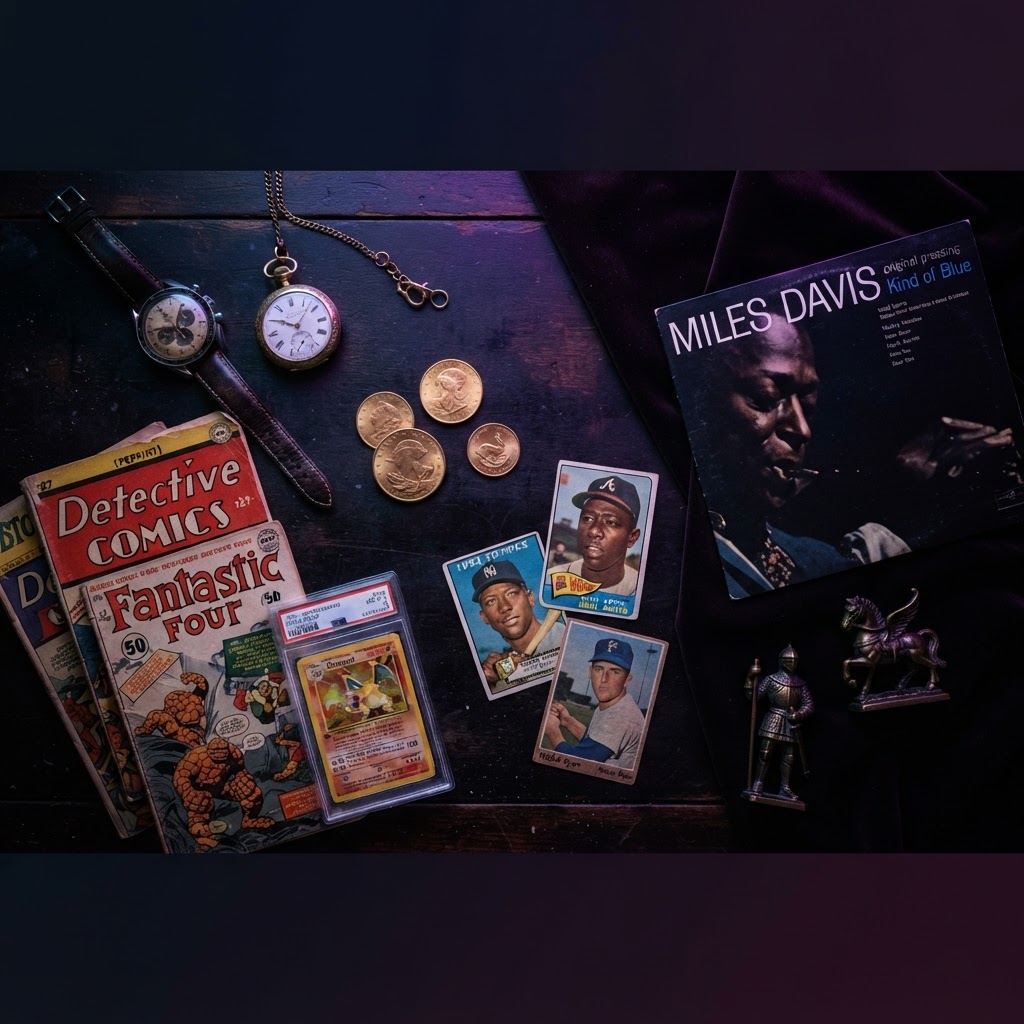
Vinyl Record Collection Management
Manage your vinyl record collection — catalogue LPs, 45s, and rare pressings, track condition, provenance, and values with AI identification and market valuation.
Vinyl record collecting has experienced a massive resurgence, with both vintage and new releases commanding significant value. From original pressings to limited editions, a serious vinyl collection can include thousands of records. MPC helps you catalogue, value, and preserve your entire vinyl collection.
How to Catalogue Vinyl Records
Cataloguing a vinyl collection requires recording the artist, album title, label, catalog number, year, and pressing information. MPC lets you record all of these along with vinyl and sleeve condition, and whether the record includes original inserts. AI identification can help recognize albums from cover photographs, and AI valuation searches current market data to estimate value.
What to Record for Each Record
- •Artist
- •Album title
- •Record label and catalog number
- •Year of release
- •Pressing information (first pressing, reissue, import)
- •Format (LP, 45, 78, 12" single)
- •Vinyl condition (Mint, NM, VG+, VG, etc.)
- •Sleeve condition (Mint, NM, VG+, VG, etc.)
- •Inserts and extras (lyric sheet, poster, etc.)
- •Purchase price, date, and source
- •Current estimated value
- •Photos (front and back cover, record label)
Pressings and Value
For vinyl, the pressing is critical. A first pressing of a classic album can be worth hundreds, while a later reissue might be worth a few dollars. MPC lets you record the pressing information for each record, including matrix numbers and label variations. The Goldmine grading standard (Mint, NM, VG+, VG, G) is used for both vinyl and sleeve condition.
Tracking Vinyl Values
The vinyl market is active and values can change with reissues, anniversaries, and artist news. MPC's AI re-valuation keeps your values current, and the price history timeline shows when values changed — essential for collectors who buy and sell records.
How to Clean and Store Vinyl Records
Maintaining the fidelity of your vinyl collection starts with rigorous cleaning and storage protocols. Dust and skin oils are the primary enemies of analog sound quality, acting as abrasives that cause surface noise and permanent groove damage. Use a carbon fiber brush before every play to remove light debris and a wet-cleaning system for deeper maintenance of your records. Always store records vertically, never at an angle, to prevent warping over time. Outer sleeves are essential to protect the cover art, while high-quality anti-static inner sleeves prevent dust attraction and mitigate static charge buildup. Keep your record collection in a cool, low-humidity area away from direct sunlight, which can quickly warp vinyl. Treating your records with care not only preserves the music quality but also ensures that the physical object maintains its collector market value.
Cleaning and Storage Kit
- •Anti-static carbon fiber brush
- •High-density polyethylene sleeves
- •Record cleaning solution kit
- •Microfiber record cleaning cloth
- •Sturdy vertical record crates
- •Archival-grade outer record covers
Frequently Asked Questions
Can MPC identify vinyl records from a photo?
Yes. MPC's AI can identify many albums from a cover photograph, including artist and title. For catalog numbers and pressing details, you may need to enter them manually.
Can I track vinyl and sleeve condition separately?
Yes. Record the condition of both the vinyl and the sleeve. The Goldmine standard (Mint, NM, VG+, VG, G) is commonly used for both.
Can I catalogue 45s and 78s?
Yes. Use the format field to record the record type (LP, 45, 78, 12" single). Each format has its own market and value considerations.
Join thousands of collectors using My Premium Collection to catalogue, value, and preserve their collectibles — privately and securely.
Start Your Vinyl Record CollectionRelated Categories & Features
Book Collection Management
Manage your book collection — catalogue first editions, rare books, and signed copies, track condition, provenance, and values with AI identification.
Learn moreCollectible Valuation
Get AI-powered collectible valuations from real market listings. Upload a photo, identify your item, and receive a value estimate with low, mid, and high ranges and source listings.
Learn moreCollectible Value Tracker
Track the value of your collectibles over time. AI-powered market valuation, monthly price history, portfolio performance, and ROI tracking for serious collectors.
Learn moreCollectible Management Software
Private collectible management software for cataloguing, valuing, and preserving personal collections. AI identification, market valuation, provenance tracking, insurance inventory, and legacy planning.
Learn more