
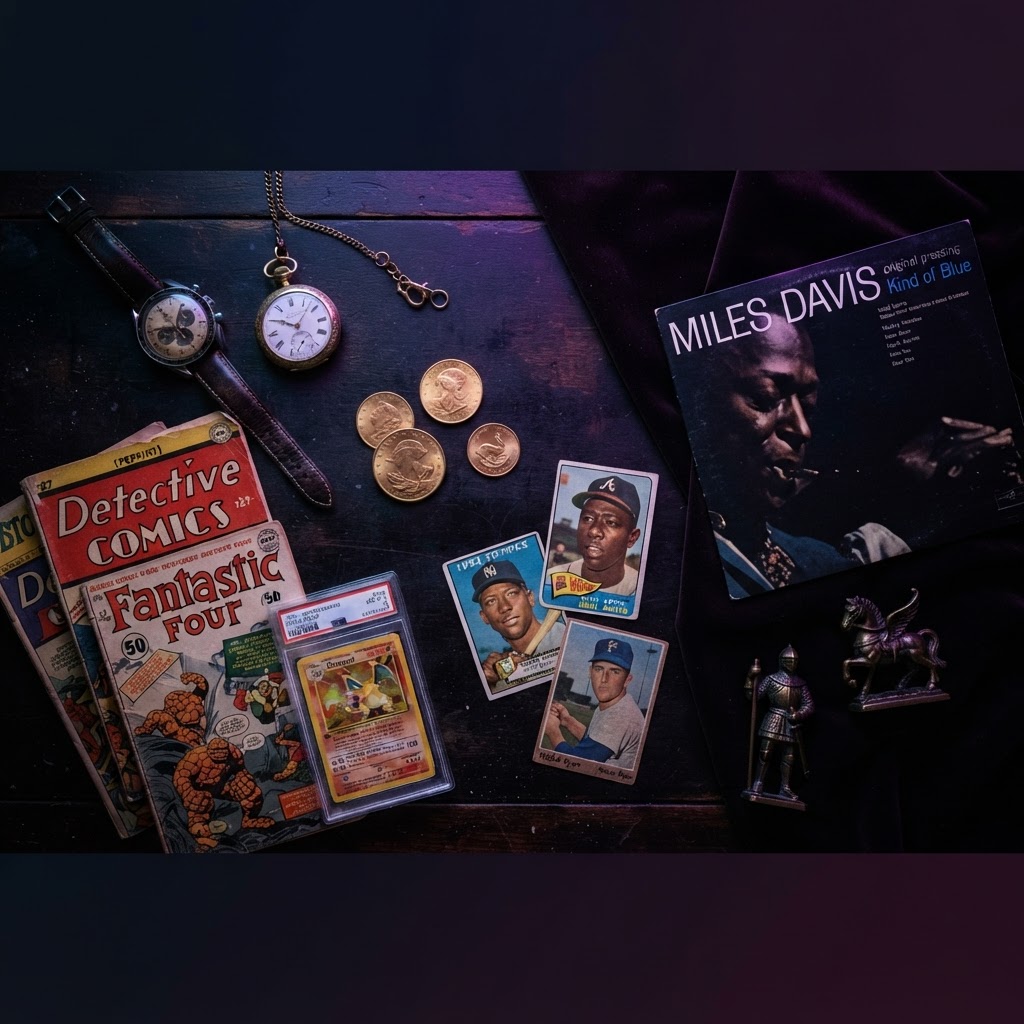
Collection Insurance Inventory
Create a collection insurance inventory in minutes. Export a complete record of your collectibles with photos, values, and descriptions — ready for your insurer.
If your collection were lost tomorrow — to fire, theft, flood, or disaster — would you be able to tell your insurer exactly what you had? Most collectors cannot. MPC's collection insurance inventory tools ensure that you always have a complete, up-to-date record of your collection, ready to hand to your insurer at a moment's notice.
Why an Insurance Inventory Matters
Insurance companies require proof of ownership and value before paying a claim. Without a documented inventory, you may receive only a fraction of what your collection is worth — or nothing at all. A proper inventory includes photographs, descriptions, condition, purchase prices, and current estimated values for every item.
How MPC Prepares Your Inventory
- •Every item you catalogue includes photos, description, condition, and value
- •AI valuations provide current estimated values, with source listings for credibility
- •Monthly re-valuation keeps values current
- •One-click Excel export includes all items with every field
- •Photos are stored permanently and referenced in the export
- •You can filter by collection, category, or value range before exporting
What to Include for Your Insurer
When you export your inventory for insurance, include: item name and description, photographs, condition, purchase price and date, current estimated value, and provenance (where and when acquired). For high-value items, include any professional appraisals or grading certificates. MPC's key contacts feature in the Legacy Plan lets you store your insurer's contact information alongside your collection.
Do not wait for a loss to document your collection. Start your insurance inventory today — it takes just minutes to add your first items.
What Insurers Look for in a Collection Inventory
An insurance company views a collection inventory as a risk assessment tool, requiring specific data points to accurately cover your assets. Insurers look for clear, concise descriptions that define exactly what is being covered, including essential details such as the manufacturer, material, edition number, and specific condition notes. A high-quality inventory acts as a baseline for valuation, preventing disputes in the event of a total or partial loss. Beyond simple identification, underwriters prioritize evidence of professional appraisals, as these establish the agreed value of your collection. Without an organized inventory that includes receipts, appraisal dates, and descriptive metadata, the claims process can become unnecessarily lengthy and frustrating. Ultimately, insurers favor collectors who demonstrate proactive management; a well-documented inventory signals that the collection is handled with care and that its value is based on objective, market-driven professional assessments rather than subjective emotional attachment.
Best Practices for Photographing Collectibles
- •Use high-resolution cameras in consistent, neutral lighting conditions
- •Capture the object from all angles, including the top, bottom, and sides
- •Photograph any serial numbers, hallmarks, or unique identifying markers
- •Take close-up shots of any existing condition issues or repairs
- •Include a scale reference, like a ruler, in at least one photo
- •Maintain a folder structure organized by item name and date
Scheduling High-Value Items on Your Policy
Scheduling an item on your insurance policy involves specifically listing high-value objects separately from your standard personal property coverage. This is a critical distinction, as basic homeowner insurance often contains sub-limits that will never cover the true market value of rare collectibles. By scheduling these items, you provide the insurer with an accurate valuation for each piece, often requiring a professional appraisal at the time of inclusion. This process ensures that if a theft, fire, or accidental damage occurs, you are compensated for the full market value rather than a depreciated actual cash value. Scheduling also often eliminates the need to pay a deductible for those specific items. It is a proactive step that moves your collection from the category of general household items to that of protected investment assets, ensuring you have tailored coverage that keeps pace with fluctuating market realities.
Updating Your Inventory After Acquisitions and Sales
Maintaining an insurance inventory is a dynamic, continuous process rather than a one-time project. Every time you acquire a new piece, your inventory must be updated immediately to include current valuation, photographs, and supporting documentation so the item is protected from the moment it enters your possession. Similarly, when you sell or gift an item, it must be removed from the inventory to ensure you are not paying premiums on assets you no longer own. Neglecting these updates creates gaps in coverage that can lead to significant financial exposure during an emergency. Consistent updates also allow you to keep your appraisal values current, which is vital in volatile markets. By treating inventory management as a regular administrative habit — perhaps aligning updates with tax season or major acquisitions — you ensure your insurance protection remains as robust, accurate, and cost-effective as possible over time.
Frequently Asked Questions
How often should I update my insurance inventory?
At minimum, review your inventory annually. MPC's automatic monthly re-valuation keeps values current, but you should add new acquisitions promptly and remove sold items.
Can I export photos with my inventory?
Yes. The Excel export references all photos attached to each item. You can also share individual item details with photos through the Collection Circle.
Does MPC provide insurance?
No. MPC is collection management software, not an insurance provider. We help you prepare the documentation your insurer needs, but you should consult a qualified insurance professional for coverage.
Join thousands of collectors using My Premium Collection to catalogue, value, and preserve their collectibles — privately and securely.
Prepare Your Insurance Inventory — FreeRelated Features
Collectible Inventory Software
Collectible inventory software for serious collectors. Track quantity, condition, purchase price, estimated value, location, and provenance for every item in your collection.
Learn moreCollection Provenance Documentation
Document collectible provenance — where you acquired each item, when, from whom, and for how much. Permanent provenance records that preserve your collection's history.
Learn moreCollectible Valuation
Get AI-powered collectible valuations from real market listings. Upload a photo, identify your item, and receive a value estimate with low, mid, and high ranges and source listings.
Learn moreCollection Legacy Planning
Collection legacy planning tools. Designate guardians, document distribution wishes, write a final letter, and ensure your collection is preserved and passed on according to your wishes.
Learn more