
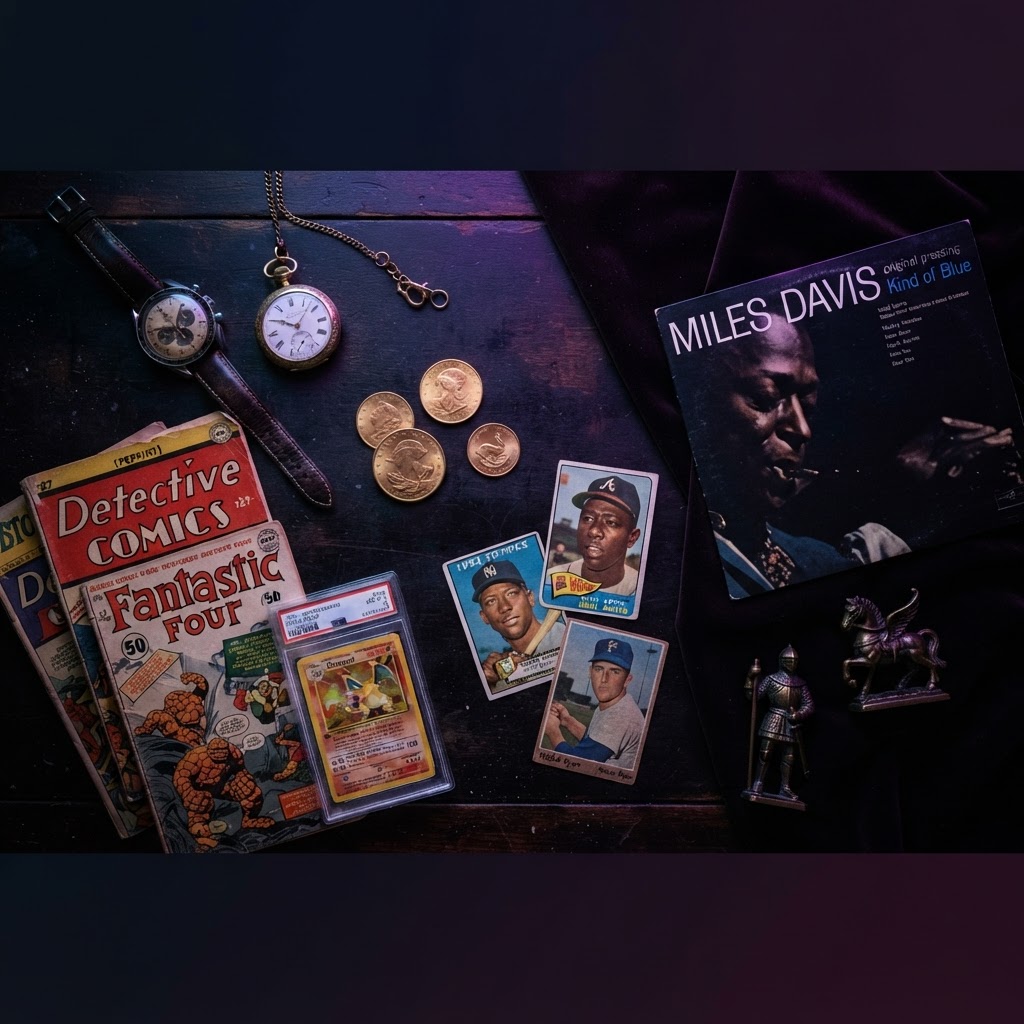
Collection Provenance Documentation
Document collectible provenance — where you acquired each item, when, from whom, and for how much. Permanent provenance records that preserve your collection's history.
Provenance — the documented history of an item's ownership — is one of the most important factors in a collectible's value and authenticity. MPC makes it easy to record and preserve provenance for every item in your collection, ensuring that the story of where each piece came from is never lost.
What Provenance Means for Collectors
For art and antiques, provenance can mean the difference between a piece worth thousands and one worth millions. For trading cards, it can mean the difference between a card suspected of being trimmed and one with a clean, documented history. For any collectible, provenance is the chain of custody that proves authenticity and adds context.
What MPC Records for Provenance
- •Acquisition date — when you obtained the item
- •Source — where you got it (dealer name, auction house, private sale, trade, gift)
- •Purchase price — what you paid
- •Description of the transaction — any relevant details about the acquisition
- •Photos — including any documentation that came with the item (receipts, certificates, grading slabs)
- •Legacy note — the story behind the item, why you bought it, and what it means to you
Provenance for the Next Generation
When you pass a collection on, provenance is what makes it valuable to the next owner. Without documentation, an item is just an object. With documentation, it has a story, a history, and a verified chain of custody. MPC's Legacy Plan module lets you attach provenance notes to specific items and designate intended recipients, so the history travels with the collection.
Why Provenance Matters for Authentication
Provenance acts as the bedrock of authenticity in the world of high-end collecting. It is not merely a list of previous owners; it is a meticulously constructed narrative that validates the origin, history, and legitimacy of an object. In an era where sophisticated forgeries have infiltrated even the most prestigious auction houses, verifiable provenance provides the critical evidence needed to separate genuine masterpieces from clever imitations. By tracing an item back to its creation or its first recorded sale, provenance mitigates the risk of illicit acquisitions and establishes a transparent trail of custody. For serious collectors, provenance is the ultimate credential, transforming an otherwise anonymous object into a historical document. Without this lineage, even the most exquisite items suffer from a cloud of suspicion, as the absence of a documented past creates insurmountable hurdles for authentication experts, museums, and potential buyers who demand absolute certainty before commitment.
Key Steps to Researching Item History
- •Consult the original artist or manufacturer catalogs and archival records
- •Review auction results databases to track sales history across global houses
- •Examine physical markings, hallmarks, or serial numbers for manufacturer verification
- •Investigate exhibition history records through museum archives and past show catalogs
- •Verify historical provenance markers like gallery stickers, stamps, or inventory labels
- •Interview previous owners or estates to document the chain of custody gaps
Digital Provenance vs Paper Records
The evolution of provenance management has shifted from dusty filing cabinets to the digital frontier. While traditional paper records — such as invoices, receipts, and hand-written letters — carry a tangible, historical weight that collectors often cherish, they are notoriously vulnerable to degradation, loss, and physical destruction. Conversely, digital provenance offers an unprecedented level of durability and accessibility. Digital systems allow collectors to organize high-resolution images, authentication certificates, and provenance narratives in a centralized, searchable hub that is protected from fire, water, or simple misplacement. While a physical provenance file may offer a romantic connection to the past, the digital format ensures that the documentation remains actionable, sharable, and verifiable for future generations. Integrating both methods creates the most robust system, utilizing physical artifacts as primary evidence supported by digital backups for long-term stability and security.
Provenance and Resale Value
Proven provenance is a powerful catalyst for resale value, often acting as a multiplier on the baseline worth of a collectible. When an item enters the secondary market with a clean, documented, and illustrious history, it gains an immediate competitive advantage over comparable pieces with missing or ambiguous documentation. Buyers are willing to pay a significant premium for the peace of mind that comes with knowing an item's pedigree is ironclad. Furthermore, provenance can tie an object to historical figures, famous past owners, or significant events, adding a layer of cultural capital that further drives up demand at auction. For investors, provenance is not just a safety feature; it is an asset class in its own right. A collector who invests the time to document provenance today effectively builds equity in their collection, ensuring that future sales are more fluid, profitable, and highly anticipated by serious collectors.
Frequently Asked Questions
What should I record for provenance?
At minimum: where you got the item, when, from whom, and what you paid. Any documentation — receipts, certificates of authenticity, grading slabs, auction lot descriptions — should be photographed and attached to the item record.
Can I add provenance to items I have had for years?
Yes. You can add or update provenance information at any time. Even partial information — "bought at a flea market in the 1990s" — is better than nothing.
How does provenance help with insurance?
Documented provenance supports authenticity and value claims. If you need to file an insurance claim, having a record of where and when you acquired an item, and what you paid, makes the process far smoother.
Join thousands of collectors using My Premium Collection to catalogue, value, and preserve their collectibles — privately and securely.
Document Your Collection's History — FreeRelated Features
Private Collection Management
Private collection management software. Your collection is private by default — no public sharing, no marketplace exposure. Secure, encrypted, and visible only to you and your invited circle.
Learn moreCollection Insurance Inventory
Create a collection insurance inventory in minutes. Export a complete record of your collectibles with photos, values, and descriptions — ready for your insurer.
Learn moreCollection Legacy Planning
Collection legacy planning tools. Designate guardians, document distribution wishes, write a final letter, and ensure your collection is preserved and passed on according to your wishes.
Learn moreCollectible Management Software
Private collectible management software for cataloguing, valuing, and preserving personal collections. AI identification, market valuation, provenance tracking, insurance inventory, and legacy planning.
Learn more