
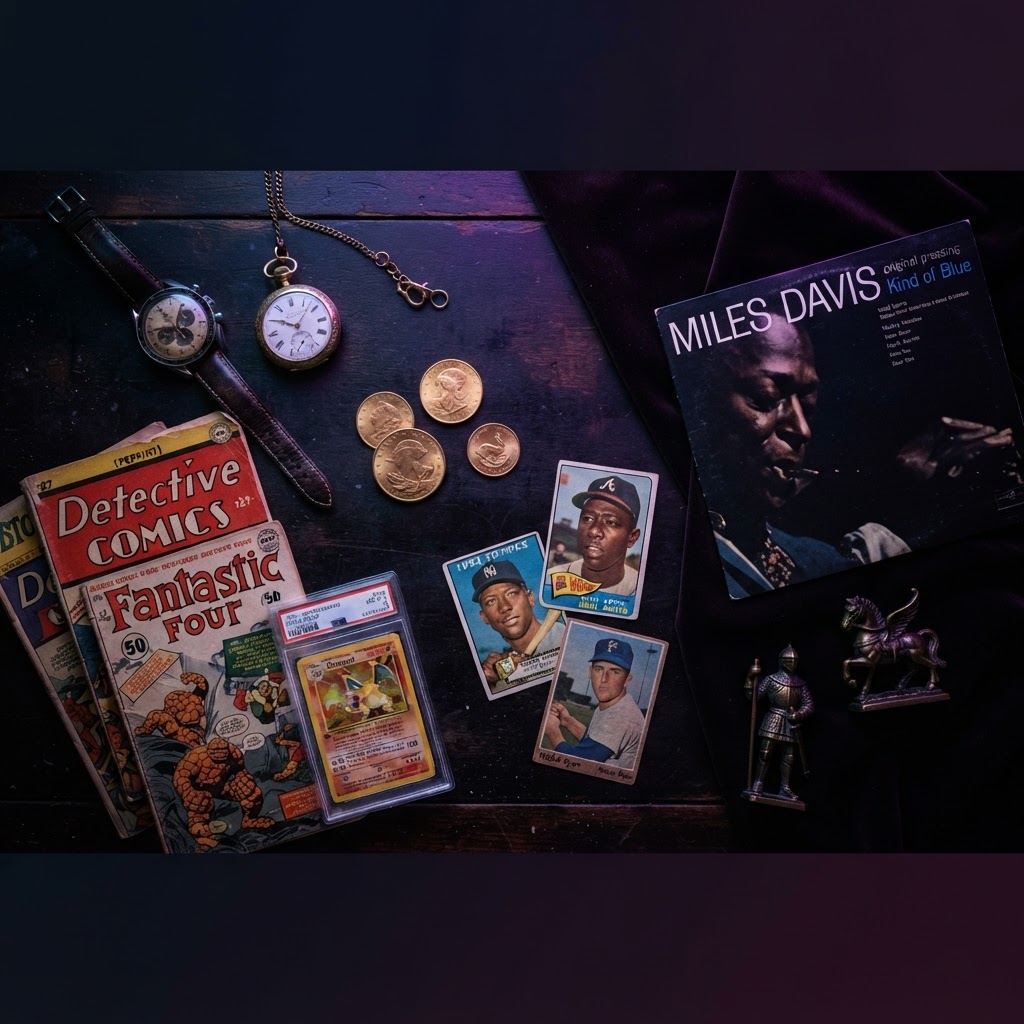
How to Catalogue a Collection
Learn how to catalogue a collection step by step. What to record for each item, how to organize your catalogue, and how collection management software makes it easy.
Cataloguing a collection is the foundation of collection management. A proper catalogue turns a pile of items into an organized, searchable, documented record of what you own — and what each item is worth. This guide walks you through the process, whether you have 20 items or 2,000.
Why Catalogue Your Collection?
Without a catalogue, you are relying on memory and shoeboxes. A catalogue gives you: a complete record of what you own, current values for insurance, provenance documentation, the ability to search and find any item instantly, and a record that can be passed on to family. It also gives you peace of mind — you know exactly what you have and where it is.
Step 1: Gather Your Items
Start by gathering your collection in one place. If your collection is too large, work in batches — one collection, one category, or one storage location at a time. Have your phone or camera ready for photographs.
Step 2: Photograph Each Item
Good photographs are the foundation of a good catalogue entry. Take clear, well-lit photos from multiple angles. For trading cards, photograph the front and back. For coins, the obverse and reverse. For watches, multiple angles including the dial, case back, and any serial numbers. If you are using MPC, the AI identification can use these photos to pre-fill catalogue entries automatically.
Step 3: Record the Essential Fields
For each item, record at minimum:
- •Name — what the item is
- •Category — trading card, coin, watch, etc.
- •Condition — mint, near mint, excellent, etc.
- •Purchase price — what you paid
- •Estimated value — what it is worth now
- •Acquisition date — when you got it
- •Source — where you got it
- •Photos — at least one clear image
Step 4: Add Provenance and Documentation
Provenance — the documented history of an item — is what separates a catalogue from a list. Record where you got each item, from whom, and for how much. Photograph any receipts, certificates of authenticity, or grading documents. Use the legacy note to record the story behind each item.
Step 5: Organize into Collections
Group your items into collections and sub-collections that match how you think about your collection. A card collector might organize by set or sport. A coin collector by country or denomination. The structure is up to you — and you can reorganize at any time.
Step 6: Review and Update Regularly
A catalogue is a living document. Add new acquisitions promptly, update values regularly (MPC does this automatically monthly), and review your organization periodically. Set aside time monthly or quarterly to keep your catalogue current.
MPC makes cataloguing fast: photograph, let AI identify and pre-fill, confirm, and save. A collection of 100 items can be catalogued in a few hours.
Common Cataloguing Mistakes to Avoid
One of the most frequent errors collectors make is failing to implement a standardized naming convention early on. Inconsistent entries for titles, dates, or manufacturer names will render your catalogue search tool effectively useless as the collection grows. Another common trap is omitting condition reports or detailed physical descriptions, assuming you will remember specific details about each item later. Furthermore, ignoring the importance of unique identification numbers can lead to confusion if you have multiple versions of similar items. Avoid the mistake of using purely visual sorting methods; instead, focus on objective, text-based data that can be filtered and categorized logically. Finally, neglecting to include acquisition dates and cost information often results in lost financial data that is impossible to retrieve once the purchase records are misplaced or discarded over several years.
Best Practices for Maintaining Your Catalogue
- •Update your records immediately after every new acquisition
- •Perform a comprehensive annual audit of your physical items
- •Schedule regular backups of your digital database files
- •Include high-resolution photographs taken from multiple angles
- •Use cloud-based storage to allow for remote accessibility
- •Cross-reference items with known serial numbers or marks
Frequently Asked Questions
How long does it take to catalogue a collection?
With MPC's AI-assisted workflow, you can catalogue an item in under a minute. A collection of 100 items can be catalogued in a few hours; 1,000 items in a few days.
What if I do not know the value of an item?
MPC's AI valuation can estimate the value of most collectibles from a photograph. The estimate includes a confidence level and the market listings used, so you can judge reliability.
Should I catalogue everything, even low-value items?
Yes. Even low-value items should be catalogued for insurance purposes and for the completeness of your collection record. You never know which items will appreciate.
Join thousands of collectors using My Premium Collection to catalogue, value, and preserve their collectibles — privately and securely.
Start Cataloguing — FreeRelated Guides
How to Value a Collection
Learn how to value a collection. AI valuation, market comparables, professional appraisal, and how to track collection value over time.
Learn moreHow to Create a Digital Inventory of Your Collectibles
Step-by-step guide to creating a digital inventory of your collectibles. Move from spreadsheets and shoeboxes to a searchable, secure digital catalogue.
Learn moreHow to Organize a Large Collection
Learn how to organize a large collection. Collections and sub-collections, tagging, search, and how collection management software keeps thousands of items manageable.
Learn moreHow to Keep Records of Your Collectibles
Learn how to keep records of your collectibles. What to document, how to store records securely, and how to ensure they survive for the next generation.
Learn more