
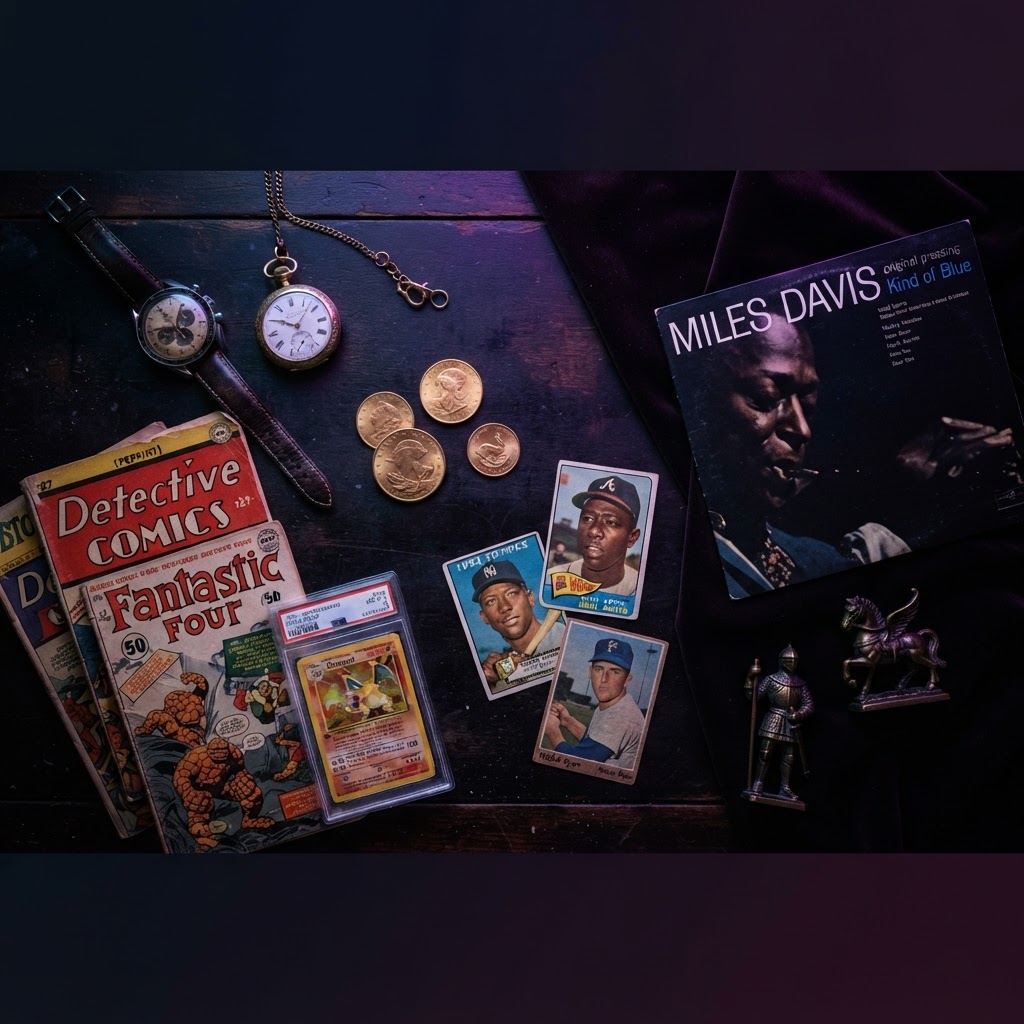
How to Photograph Collectibles for Identification
Learn how to photograph collectibles for AI identification and cataloguing. Lighting, angles, resolution, and best practices for each collectible type.
Good photographs are the foundation of collection management. They enable AI identification, support insurance claims, document condition, and preserve the visual record of your collection. This guide covers how to photograph collectibles for the best results.
General Photography Tips
- •Use good lighting — natural daylight or a well-lit room. Avoid harsh shadows and glare.
- •Fill the frame — get close enough that the item fills most of the photo.
- •Hold steady — use both hands or rest your phone on a surface to avoid blur.
- •Clean the lens — phone camera lenses collect pocket dust; wipe before shooting.
- •Use multiple angles — front, back, sides, and any details or marks.
- •Include a scale reference for small items (a coin or ruler for size context).
Photographing Trading Cards
For trading cards, photograph the front and back. If the card is graded, photograph through the slab at an angle that minimizes glare. For raw cards, photograph on a flat, non-reflective surface. Make sure the card number (usually on the back) is readable.
Photographing Coins
For coins, photograph the obverse (front) and reverse (back). Hold the camera straight to avoid distortion. For graded coins, photograph through the slab. Include a close-up of any mint marks or varieties. Use even, diffused lighting to avoid hot spots on reflective surfaces.
Photographing Watches
For watches, photograph the dial, the case back (with serial number if visible), the lugs, and the clasp. If the watch has box and papers, photograph those too. Use multiple angles to capture the condition of the case, crystal, and bezel.
Photographing Documentation
Any documentation — receipts, certificates of authenticity, grading documents — should be photographed clearly and attached to the item record. Lay documents flat, use even lighting, and make sure all text is readable. These photos are your permanent record of provenance.
Using Photos for AI Identification
When you upload a photo to MPC, the AI uses it to identify the item, detect identifiers (barcodes, serial numbers, ISBNs), assess condition, and estimate value. Clear, well-lit photos from the right angles give the AI the best chance of accurate identification. The AI provides a confidence level so you know how reliable the identification is.
Lighting Setup for Different Collectible Types
Lighting is the most critical element in professional-grade photography for your collection, and a one size fits all approach will inevitably fail. For matte items like vintage trading cards or books, use soft, diffused lighting from two opposite sides to eliminate harsh shadows while maintaining textural detail. For metallic or glossy items, you must avoid direct reflection by using bounce cards or light tents to wrap the object in soft light. Controlling the color temperature is equally important; aim for neutral white balance, around 5500K, to ensure the colors in the photo match the item in person. If you are photographing items with complex surfaces, a rim light placed behind the object can help separate it from the background, adding depth and professional polish to your final image archive. Consistent lighting setup allows for comparable images over many years of curation.
Lighting Gear Essentials
- •Two softbox LED panels
- •Neutral 5500K light temperature
- •Large white diffusion sheets
- •Black foam boards for negative fill
- •Tripod for consistent camera positioning
- •Bounce cards to control highlights
Frequently Asked Questions
Do I need a professional camera?
No. A modern phone camera is more than sufficient for collection photography. The key is good lighting, a clean lens, and holding steady.
How many photos should I take per item?
At minimum, photograph the front and back. For more valuable items, add multiple angles and close-ups of details, marks, and documentation. MPC allows unlimited photos per item.
Should I photograph graded items in their slabs?
Yes. Photograph graded items through the slab, at an angle that minimizes glare. The grading information (service, grade, cert number) should be readable in the photo.
Join thousands of collectors using My Premium Collection to catalogue, value, and preserve their collectibles — privately and securely.
Start Photographing Your Collection — FreeRelated Guides
How to Identify an Unknown Collectible
Learn how to identify an unknown collectible. AI identification, visual research, community resources, and when to consult an expert.
Learn moreHow to Determine the Condition of a Collectible
Learn how to determine the condition of a collectible. Standard grading scales, condition factors, and how AI can assess condition from photos.
Learn moreHow to Catalogue a Collection
Learn how to catalogue a collection step by step. What to record for each item, how to organize your catalogue, and how collection management software makes it easy.
Learn moreHow AI Can Help Identify Collectibles
Learn how AI can help identify collectibles from photographs. Computer vision, identifier detection, condition assessment, and how it works.
Learn more