



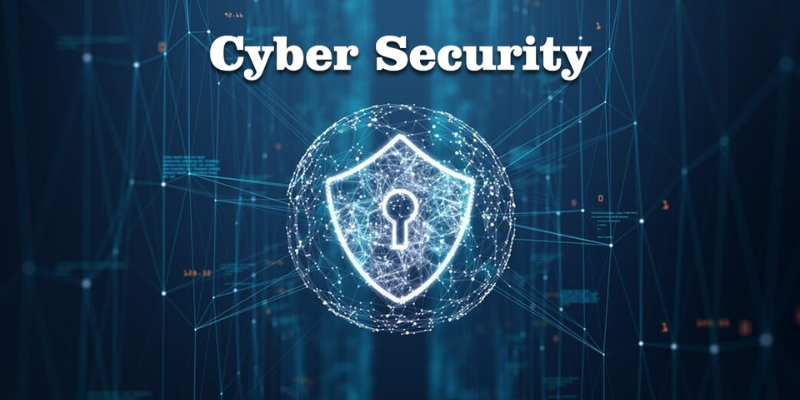
Quantum computing has moved from science-fair curiosity to boardroom conversation faster than most people expected. Every year, computers become more powerful, but quantum computing feels different almost like stepping into a new dimension of technology. Rather than depending on binary bits, quantum computers operate with qubits that can occupy several states simultaneously. This new model could enable them to solve certain problems millions of times faster than classical computers. As exciting as that sounds, it also raises concerns, especially in cybersecurity. In today’s digitally connected world, even the tiniest shift in computing power can ripple across industries, governments, and regular everyday users. As businesses explore future technologies, many professionals are seeking smarter ways to upskill, and institutions like FITA Academy are helping bridge that gap through practical, industry-ready training.
The Quantum Leap: Why It Matters
For decades, cybersecurity has relied on mathematical complexity. You secure something by making it difficult to crack, and computers no matter how fast would take years or even centuries to break certain encryption methods. Quantum computing flips this assumption on its head. Algorithms that used to be practically unbreakable could become solvable in minutes or hours using quantum math.
This doesn’t mean everything will crumble overnight, but the possibility has sparked a global race. Governments, tech companies, and research labs are all pushing hard to understand how much risk quantum technology actually introduces and what new forms of protection we need to build.
The Biggest Concern: Breaking Today’s Encryption
Most of the world currently runs on public-key encryption. Whether you send a message on WhatsApp, make an online purchase, access your company VPN, or store files in the cloud, you rely on encryption standards such as RSA and ECC. These standards depend on extremely complicated math problems, like factoring massive prime numbers. Classical computers struggle with these problems, which is why encryption holds strong.
Quantum computing, however, can use algorithms such as Shor’s algorithm to solve these problems much faster. Suddenly, “practically impossible to crack” no longer feels so impossible. If quantum machines reach the right level of stability and scale, many of the protections we rely on today could become vulnerable.
Cybersecurity professionals are already preparing for this shift. As more learners look to understand the next wave of security threats, many turn to advanced programs such as Cyber Security Course in Chennai to stay ahead of this technological evolution.
Why Quantum Cyberattacks Could Be Devastating
Quantum attacks won’t look like today’s cyberattacks. They will target the backbone of digital trust. Imagine a world where encrypted data stored today can be decrypted in the future. Hackers could collect encrypted information now and simply wait until quantum machines catch up. Sensitive medical records, financial histories, and government data could all be exposed long after people believe it is safe.
Another major worry is digital signatures. These signatures confirm your identity when you log in to services or install software. If quantum technology compromises them, attackers could impersonate users, deploy malware disguised as trusted updates, or even forge financial transactions.
This upcoming challenge is why the industry is talking not just about defense but about future-proofing. Organizations are beginning to experiment with quantum-resistant algorithms and quantum-safe network designs. Professionals eager to understand the offensive side of digital risks often pursue specialized training such as an Ethical Hacking Course in Chennai, allowing them to simulate real-world threats and strengthen defenses.
Post-Quantum Cryptography: Building the Future of Security
The good news is that researchers aren’t waiting for quantum computers to catch up. They’re already building cryptographic systems designed to survive quantum attacks. This new field, known as post-quantum cryptography (PQC), uses mathematical problems that even quantum machines struggle to solve.
The National Institute of Standards and Technology is actively working on formalizing standards for PQC to prepare for the future. These new algorithms aim to replace the classical systems we’ve relied on for decades. Transitioning will take time, especially for large organizations with complex infrastructures, but the process has already begun.
Businesses are slowly realizing they cannot afford to wait until the threat becomes reality. Leaders now discuss the importance of long-term resilience, which is why many companies partner with a forward-thinking Training Institute in Chennai to prepare their workforce for the next era of cybersecurity.
Quantum Technology Won’t Just Break Security It Can Also Strengthen It
There’s an interesting twist to the story. While quantum computing introduces new risks, it also inspires new defensive tools. Quantum Key Distribution (QKD), for example, uses quantum mechanics to create encryption keys that change instantly if intercepted. This means any attempt to tamper with communication becomes detectable in real time.
Another promising area is quantum random number generation (QRNG). Since randomness is the foundation of cryptography, generating truly unpredictable numbers is crucial. Quantum mechanics can provide randomness far more reliably than classical systems.
These innovations don’t solve every problem, but they offer glimpses of a world where quantum technology strengthens security rather than breaking it.
Preparing for a Hybrid Future
Most experts agree that we’re heading toward a hybrid world where classical and quantum technologies coexist. Organizations will use conventional systems for everyday tasks but shift to quantum-safe systems for high-security environments.
The workforce of the future will need a blend of knowledge: understanding traditional networks, modern cloud ecosystems, quantum-resistant cryptography, and the principles behind quantum algorithms. This blend of expertise will likely become a core part of business education, especially as institutions like a well-established Business School in Chennai begin integrating future-tech modules into their curriculum for the next generation of leaders.
What Individuals and Businesses Should Do Now
Even though large-scale quantum computers are not widely available yet, preparation shouldn’t wait. Everyone from government bodies to small businesses will eventually need to migrate their systems. The transition won’t be easy, but awareness is the first and most important step.
Professionals should stay updated on quantum-safe practices, organizations should begin planning migration strategies, and educational institutions should offer programs that blend cybersecurity fundamentals with emerging quantum concepts. The sooner we start preparing, the smoother the transition will be.
Quantum computing isn’t just another technological upgrade; it’s a shift that will redefine the digital world. For cybersecurity, it marks both a threat and an opportunity a challenge that pushes us to rethink everything we know about digital protection. As industries adopt new strategies and researchers build quantum-resistant systems, one thing becomes clear: staying informed and skilled will be more important than ever.


<a href="https://www.pmcti.in/medical-coding-course.php">Medical Co... more