



Corner cabinets are one of those things nobody talks about until they become a problem. You open the door, reach into the dark, and pull out something you forgot you even owned. Half the space is wasted. The other half is a mess.
It doesn't have to be that way. There are real, practical solutions that turn corner cabinets into some of the hardest-working storage in your kitchen. You just have to know what's available and what actually works in a real home.
A lot of Columbus homeowners are rethinking their kitchen layouts right now. And the corner cabinet is usually where the frustration starts. The good news is that the market for smart storage systems has grown a lot. Whether you're doing a full renovation or just trying to get more organized, there's something here for every budget and every kitchen type.
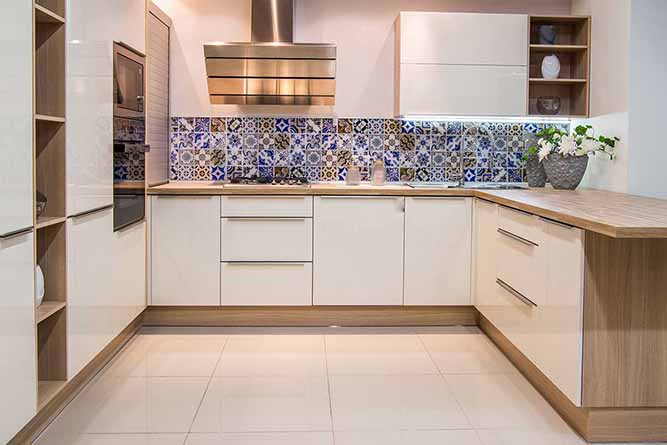
The style of your cabinetry matters too. If you have flat door kitchen cabinets which are common in modern and contemporary kitchens you're actually in a great position. The clean lines and minimal hardware of flat-front doors pair beautifully with pull-out systems and modern organizers. The two work together both visually and functionally.
So let's get into it. Here's everything you need to know about making your corner cabinet space actually work for you.
Real Reason Corner Cabinets Are So Frustrating
It comes down to geometry. Corner cabinets exist because two walls meet at a 90-degree angle. That's unavoidable in almost every kitchen layout.
The problem is that standard cabinet doors open on one side. They can't give you access to the full depth of a corner. So a huge portion of the storage space sits in a blind zone technically reachable but practically useless.
Most contractors fill this space with a basic shelf and call it done. That works, barely. You can store things there. But retrieving them is another story. You end up on your knees, arm stretched into the back of the cabinet, knocking things over to get to what you need.
In Columbus kitchens especially where older homes often have smaller kitchens with limited counter space every square inch of storage matters. Losing a corner cabinet to poor organization is like throwing away usable room.
The fix isn't just better organization habits. It's about choosing the right system for your specific cabinet type and layout.
Lazy Susans: The Classic That Still Works
Before we get into modern systems, let's give credit where it's due.
The lazy Susan has been a kitchen staple for generations. It's a rotating shelf that lets you spin items into reach instead of digging for them. And it still works remarkably well in the right application.
There are two main styles to know. The full-circle version fits inside a standard corner cabinet and spins on a center pole. The kidney-shaped or D-style version has a cutout that fits around the cabinet door frame it's designed for cabinets where the door is part of the opening.
Best for: Spices, canned goods, condiments, small jars, and anything you grab regularly.
Not ideal for: Large pots, awkward shapes, or heavy appliances. Things slide around during rotation and items at the back still get forgotten.
The biggest advantage is cost. A decent lazy Susan can be installed for well under $100. For renters or anyone not ready to commit to a built-in system, it's an easy win.
Pull-Out Drawer Systems for Corner Cabinets
This is where things get more interesting and more effective.
Pull-out corner cabinet systems use a set of shelves mounted on heavy-duty drawer slides. When you open the cabinet door, the shelves glide forward and out. Everything is visible. Nothing gets lost. You don't have to reach into a dark corner at all.
The most popular version is called a magic corner or swing-out system. The shelves are mounted on a pivot mechanism. They swing out and forward in a smooth arc when the door opens. It feels like the cabinet is doing the work for you.
Another popular style is the LeMans unit. Named after the racing circuit, it has kidney-shaped shelves that arc out in a wide sweep. It maximizes the usable surface area and works beautifully in larger corner cabinets.
These systems are on the higher end cost-wise. Expect to spend anywhere from $150 to $500 depending on brand, size, and quality. Professional installation is recommended for most of them the fit has to be right or the mechanism won't operate smoothly.
Solving the Blind Corner Cabinet Problem
The blind corner is the most challenging cabinet type in any kitchen. One side of the cabinet is completely hidden behind the face frame of the adjacent cabinet. You can't see it. You can barely reach it.
Standard corner solutions don't fully solve it. A lazy Susan in a blind corner still leaves the far end unreachable. A basic pull-out only addresses part of the opening.
The right solution here is a blind corner pull-out optimizer. These units have two shelves that work together. The outer shelf pulls forward first, then the inner shelf slides behind it along a track. The whole system unfolds so everything stored inside becomes reachable without crawling into the cabinet.
This is also where the style of your cabinetry comes into play again. A well-designed corner kitchen cabinet, whether it's a base unit, a wall unit, or a pantry-style corner can be fitted with one of these systems during installation or as a retrofit. The key is making sure your cabinet's internal dimensions match the unit you're buying.
For Columbus homeowners doing a kitchen remodel, this is one of the upgrades worth building into the plan from the start. Adding it later is possible but more complicated.
Simple, Budget-Friendly Solutions That Actually Help
Not every solution requires a big investment. There are a few straightforward options that can make a real difference without a renovation.
Stackable shelf inserts let you add a second level inside a cabinet. Instead of stacking items one deep, you get two layers. It doesn't solve the reach problem, but it doubles the storage density for items you do access regularly.
Freestanding turntables are the no-installation version of a lazy Susan. They sit on any shelf and spin freely. They're cheap, movable, and easy to clean. Great for a corner cabinet that just needs a little more organization.
Pull-out bins on slides can be retrofitted into existing cabinets without major modifications. They're not as elegant as a full pull-out system, but they work for many kitchen layouts and are available at most hardware stores.
For renters in Columbus apartments where cabinet modifications often aren't allowed these non-permanent options are the smart move. You get better organization without violating your lease.
What to Store in Corner Cabinets (and What to Move Out)
This might sound obvious, but most people never think about it: not everything belongs in a corner cabinet.
Corner cabinets are best for items you don't need every single day. Bulky pots and pans, seasonal bakeware, large serving dishes, appliances you use occasionally. These things don't need prime real estate in your kitchen. The corner is actually perfect for them.
What shouldn't live in a corner? Anything you grab daily. Spices, oils, everyday dishes, glasses, cutting boards. These items should be in easy-reach cabinets. Keeping them in a corner creates friction every time you cook.
Once you reassign what lives in the corner, even a basic lazy Susan system starts working much better. The problem isn't always the storage system, sometimes it's just the wrong stuff in the wrong place.
Diagonal Corner Cabinets and Renovation Options
If you're doing a full kitchen renovation, the corner cabinet conversation opens up even more.
A diagonal corner cabinet sometimes called an angled base or angled wall cabinet places a flat cabinet face across the corner instead of trying to wrap shelving around it. This gives you a single, accessible opening. No blind zones. No awkward reach. Just a normal-looking cabinet that happens to sit at 45 degrees.
It uses slightly less raw storage volume, but almost all of that volume is actually accessible. In practice, a diagonal corner cabinet often holds more usable items than a standard corner unit twice its size.
This is a decision that has to happen at the design stage. You can't retrofit a diagonal cabinet into an existing kitchen without a significant rebuild. But for Columbus homeowners planning a full kitchen remodel, it's an option worth discussing with your cabinet installer.
Pair a diagonal cabinet with flat-door fronts and you get a clean, seamless look that feels intentional and modern. No visual clutter, no awkward angles showing. Just a well-designed kitchen that uses every inch.
Choosing the Right System for Your Kitchen
There's no single right answer here. The best solution depends on your cabinet type, your budget, and how much you cook. If you have a standard corner base cabinet with good door clearance, a swing-out pull-out system is usually the best all-around investment. It's the most functional upgrade you can make short of a full renovation. If you have a blind corner, the pull-out optimizer is the solution designed specifically for your situation. Don't try to force a lazy Susan into a blind corner it won't work well.
If you're on a tight budget or renting, start with a freestanding turntable and some stackable shelf inserts. You'll get meaningful improvement without spending much. And if you're planning a kitchen renovation, talk to your cabinet supplier about corner cabinet storage solutions upfront. It's much easier and cheaper to design for the corner before installation than to fix it afterward.
The best kitchens in Columbus aren't the biggest ones. They're the ones where every cabinet, every drawer, and every corner has been thought through. That's what makes cooking feel easy instead of frustrating.
For homeowners who want to explore kitchen storage options that go beyond basic shelving, a consultation with a local kitchen specialist is always worth the time. You'll likely find solutions you didn't know existed and a few that fit your space perfectly.
FAQ
Q: What is the most space-efficient solution for a corner cabinet?
A swing-out or magic corner pull-out system gives you the best access and the highest usable storage ratio. It's more expensive than a lazy Susan, but the difference in usability is significant. For most base corner cabinets, it's the top recommendation.
Q: Can I install a corner organizer myself, or do I need a professional?
Simple options like turntables and stackable risers are DIY-friendly. Pull-out systems and swing-out units are technically DIY-possible, but they require precise measuring and careful installation. A small mistake can mean the mechanism doesn't work properly. For expensive units, professional installation is worth the cost.
Q: What is a blind corner cabinet?
A blind corner cabinet has part of its interior hidden behind the adjacent cabinet frame. You can only access it from one side, and the far portion is hard to reach. Blind corner pull-out optimizers are specifically designed to solve this problem by bringing those hidden shelves forward when the door opens.
Q: Are lazy Susans still worth buying?
Yes, for the right situation. They're affordable, easy to install, and genuinely useful for smaller items like spices and canned goods. They're not the best solution for large pots or awkward shapes. If you need a budget-friendly starting point, a lazy Susan is a solid choice.
Q: How do I measure my corner cabinet before buying an organizer?
Measure the internal width of the cabinet opening, the depth from front to back, and the height of the interior space. Most organizer manufacturers list required minimum dimensions in their product specs. Always measure before you buy returns on large cabinet hardware can be complicated.
Q: What items work best in corner cabinets?
Bulky, occasional-use items are the best fit. Large mixing bowls, roasting pans, seasonal bakeware, stand mixer attachments, and serving platters all make sense in a corner. Everyday items like spices, oils, and dishes should stay in more accessible spots.
Q: How much does a pull-out corner cabinet system cost?
Basic pull-out systems start around $100 to $150 for simpler designs. Mid-range swing-out and magic corner units typically run $200 to $400. High-end custom or brand-name systems can reach $500 or more. Installation adds to the cost if you're not doing it yourself.