
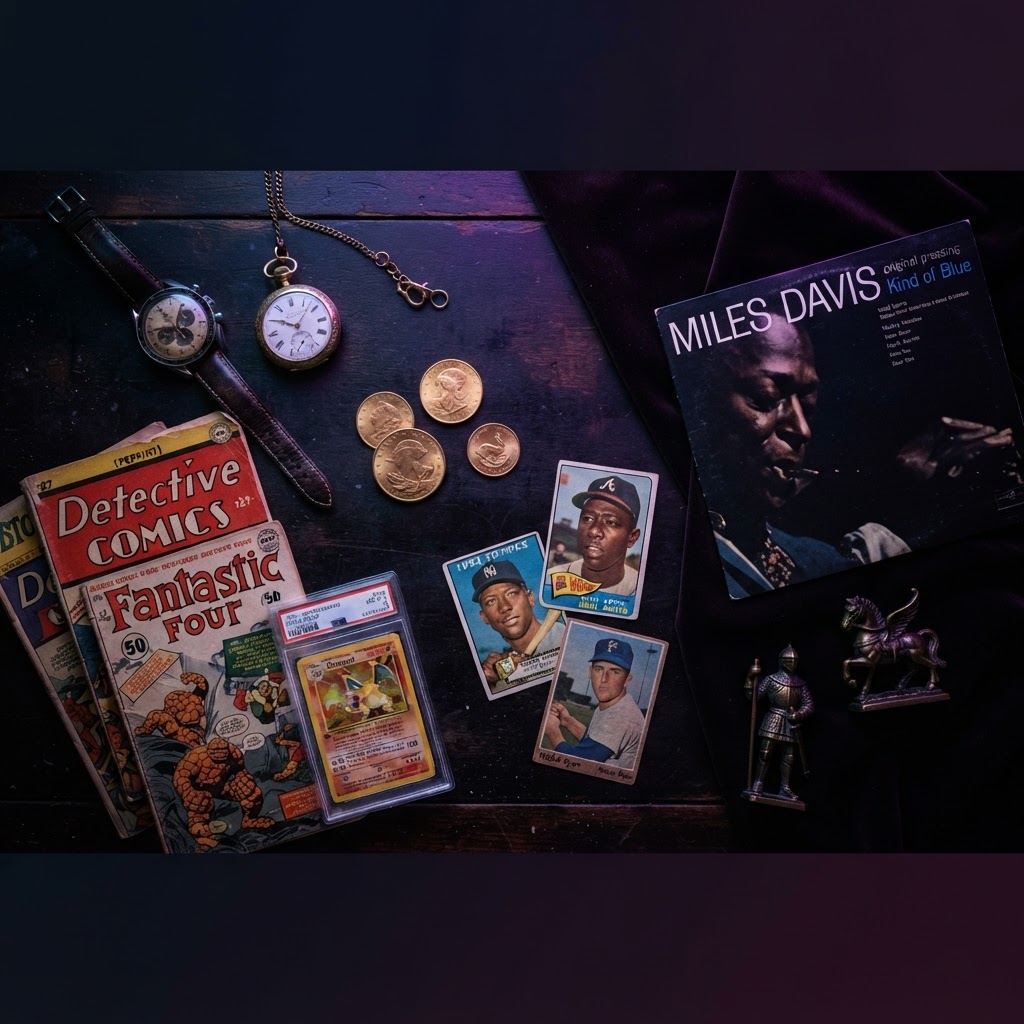
How to Document Collectible Provenance
Learn how to document collectible provenance — the history of ownership for each item. What to record, why it matters, and how to preserve it.
Provenance — the documented history of an item's ownership — is one of the most important factors in a collectible's value and authenticity. This guide explains what provenance is, why it matters, and how to document it for every item in your collection.
What Is Provenance?
Provenance is the chain of custody for an item — who owned it, when, and how they acquired it. For art, provenance can trace a painting back to the artist's studio. For trading cards, it can show that a card was pulled from a pack at a specific event. For any collectible, provenance supports authenticity and adds to the item's story.
Why Provenance Matters
- •Authenticity — documented provenance supports that an item is genuine
- •Value — items with documented provenance command higher prices
- •Insurance — provenance documentation supports value claims
- •Estate planning — provenance helps heirs understand what items are and why they matter
- •Historical record — provenance preserves the story of your collection for future generations
What to Record for Provenance
For each item, record at minimum:
- •Acquisition date — when you obtained the item
- •Source — where you got it (dealer name, auction house, private sale, trade, gift, pack pull)
- •Purchase price — what you paid
- •Transaction details — any relevant information about the acquisition
- •Documentation — receipts, certificates of authenticity, grading documents, auction lot descriptions
- •Previous owners — if known, the chain of ownership before you
- •Story — why you acquired it and what it means to you (the legacy note)
How to Photograph Documentation
Any documentation that comes with an item should be photographed and attached to the item record. This includes receipts, certificates of authenticity, grading slabs, auction catalogs, and letters of provenance. Store these photos alongside the item photos in your collection management system. MPC allows unlimited photos per item.
Provenance for the Next Generation
When you pass a collection on, provenance is what makes it valuable to the next owner. Without documentation, an item is just an object. With documentation, it has a story, a history, and a verified chain of custody. MPC's Legacy Plan module lets you attach provenance notes to specific items and designate intended recipients, so the history travels with the collection.
Digital vs Physical Provenance Records
The evolution of provenance documentation has moved toward a hybrid model that combines the security of physical archives with the accessibility of digital systems. Physical provenance includes original sales receipts, exhibition catalogs, certificates of authenticity, and personal correspondence related to the item's history. These provide an essential audit trail that is often legally required for high-value transactions. However, physical records are fragile and susceptible to damage or loss. Digitizing these documents creates a searchable, sharable database that protects the history of the object while making it easier to verify authenticity for potential buyers. To maintain a complete trail, store digital scans alongside your physical archives in a climate-controlled environment. Ensuring that your digital backups are linked to physical items via clear, consistent file naming is the most effective way to protect your items' history.
Researching an Item's History
- •Consult original manufacturer catalogs and records
- •Check public auction databases for previous sale dates
- •Reach out to previous owners for additional anecdotes
- •Verify information against known academic archives
- •Check for historical exhibition labels on the item
- •Search international stolen art or property databases
Frequently Asked Questions
What if I do not have documentation for an item?
Record what you do know — even "bought at a flea market in the 1990s" is better than nothing. Partial provenance is still valuable, and you can always add more information later.
Should I photograph receipts and certificates?
Yes. Always photograph any documentation that comes with an item and attach it to the item record. Physical documents can be lost or damaged; digital copies are permanent.
How does provenance help with insurance?
Documented provenance supports authenticity and value claims. If you need to file an insurance claim, having a record of where and when you acquired an item, and what you paid, makes the process far smoother.
Join thousands of collectors using My Premium Collection to catalogue, value, and preserve their collectibles — privately and securely.
Document Your Collection's History — FreeRelated Guides
How to Keep Records of Your Collectibles
Learn how to keep records of your collectibles. What to document, how to store records securely, and how to ensure they survive for the next generation.
Learn moreHow to Prepare a Collection for Insurance
Learn how to prepare your collection for insurance. Documentation, valuation, photographs, and how to create an insurance-ready inventory.
Learn moreHow to Leave a Collection to Your Family
Learn how to leave a collection to your family. Designate recipients, document wishes, share access, and ensure your collection is preserved for the next generation.
Learn moreHow to Catalogue a Collection
Learn how to catalogue a collection step by step. What to record for each item, how to organize your catalogue, and how collection management software makes it easy.
Learn more