How to Organize a Large Collection
Learn how to organize a large collection. Collections and sub-collections, tagging, search, and how collection management software keeps thousands of items manageable.
A large collection — hundreds or thousands of items — requires a systematic approach to organization. Without it, you lose track of what you have, duplicates creep in, and the collection becomes unmanageable. This guide covers strategies for organizing large collections effectively.
Start with a Logical Structure
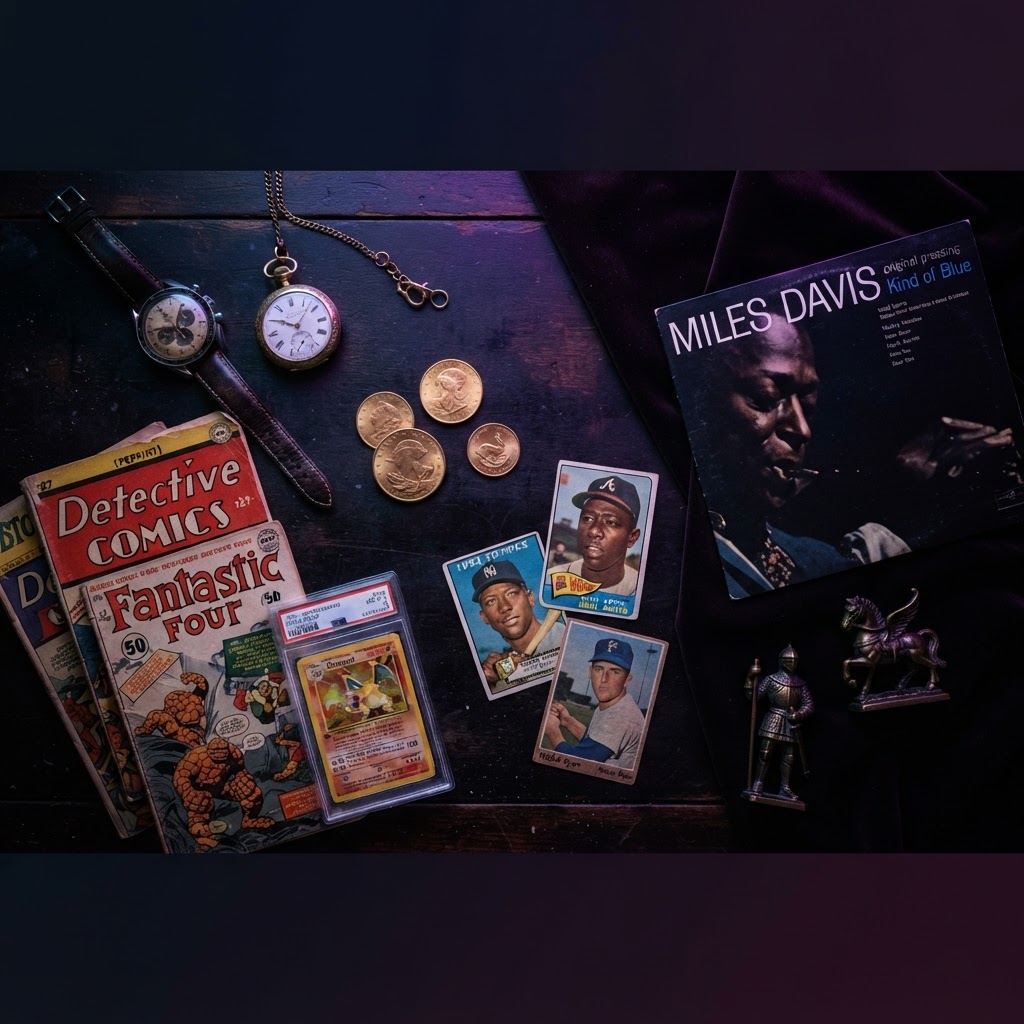
Before adding items, think about how you want to organize your collection. The structure should match how you think about and interact with your collection. A card collector might organize by sport, then by set, then by year. A coin collector by country, then by denomination, then by year. A watch collector by brand, then by model.
Use Collections and Sub-Collections
MPC lets you create collections and sub-collections, so you can build a hierarchy that matches your mental model. For example: "Pokémon Cards" → "Base Set" → "Holo Rares." An item can belong to any collection or stand alone. You can reorganize at any time without losing data.
Use Tags for Cross-Cutting Categories
Not every organizational dimension fits neatly into a hierarchy. Tags let you cross-cut your collections: tag items as "investment grade," "for insurance," "inherited," or any custom label. An item can have multiple tags, and you can filter by tag across all collections.
Leverage Search and Filter
As your collection grows, search and filter become your primary navigation tools. MPC lets you search by name, category, or any text, and filter by collection, value range, condition, or rarity. Sort by value, date added, or name. With good search, you can find any item in seconds — even in a collection of thousands.
Handle Duplicates and Multiples
Many collections include duplicates or multiples of the same item. MPC's quantity field lets you track how many of each item you own without creating duplicate records. For items where each copy has different condition or value (e.g., the same card in different grades), create separate items and use tags to link them.
Regular Maintenance
A large collection needs regular maintenance. Set aside time monthly or quarterly to: add new acquisitions, remove sold or traded items, review your organization structure, update values (MPC does this automatically), and check for duplicates. A well-maintained collection is a joy; an unmaintained one is a burden.
Using Tags Effectively for Cross-Cutting Organization
When your collection grows to thousands of items, traditional folder-based systems often fail because individual objects belong in multiple logical categories. Instead of relying on a strict hierarchy, implement a tag-based metadata system that allows you to categorize items by various independent attributes. For instance, a vintage stamp could be tagged by country of origin, era of production, subject matter, and acquisition source simultaneously. By applying these multidimensional labels, you can instantly filter your entire inventory to see every item related to a specific theme or history, regardless of where the physical object is stored. This dynamic approach to organization transforms your inventory database into a powerful search tool, ensuring that you never lose track of a specific piece of history within a vast, sprawling collection of assets that would otherwise become unmanageable over time.
Steps to Implement a Tagging System
- •Audit your collection to identify the most common search patterns
- •Create a standardized list of tags to prevent redundancy
- •Apply at least three distinct tags to every new acquisition
- •Use software that supports nested and boolean tag searching
- •Perform quarterly reviews to prune unused or obsolete tags
- •Ensure all digital assets share the same tagging schema
Frequently Asked Questions
Is there a limit to how many items I can have?
No. MPC supports unlimited items on all tiers, including the free plan. Whether you have 50 items or 50,000, you can catalogue your entire collection.
Can I reorganize my collection after I have added items?
Yes. You can move items between collections, rename collections, create new collections, and restructure your organization at any time without losing any data.
How do I handle items that do not fit a category?
MPC includes a custom category option for items that do not fit standard categories. You can also use tags to organize items across categories.
Join thousands of collectors using My Premium Collection to catalogue, value, and preserve their collectibles — privately and securely.
Organize Your Collection — FreeRelated Guides
How to Catalogue a Collection
Learn how to catalogue a collection step by step. What to record for each item, how to organize your catalogue, and how collection management software makes it easy.
Learn moreHow to Create a Digital Inventory of Your Collectibles
Step-by-step guide to creating a digital inventory of your collectibles. Move from spreadsheets and shoeboxes to a searchable, secure digital catalogue.
Learn moreHow to Keep Records of Your Collectibles
Learn how to keep records of your collectibles. What to document, how to store records securely, and how to ensure they survive for the next generation.
Learn moreHow to Track the Value of Your Collection Over Time
Learn how to track your collection's value over time. Monthly re-valuation, price history, portfolio analytics, and ROI tracking for collectors.
Learn more