
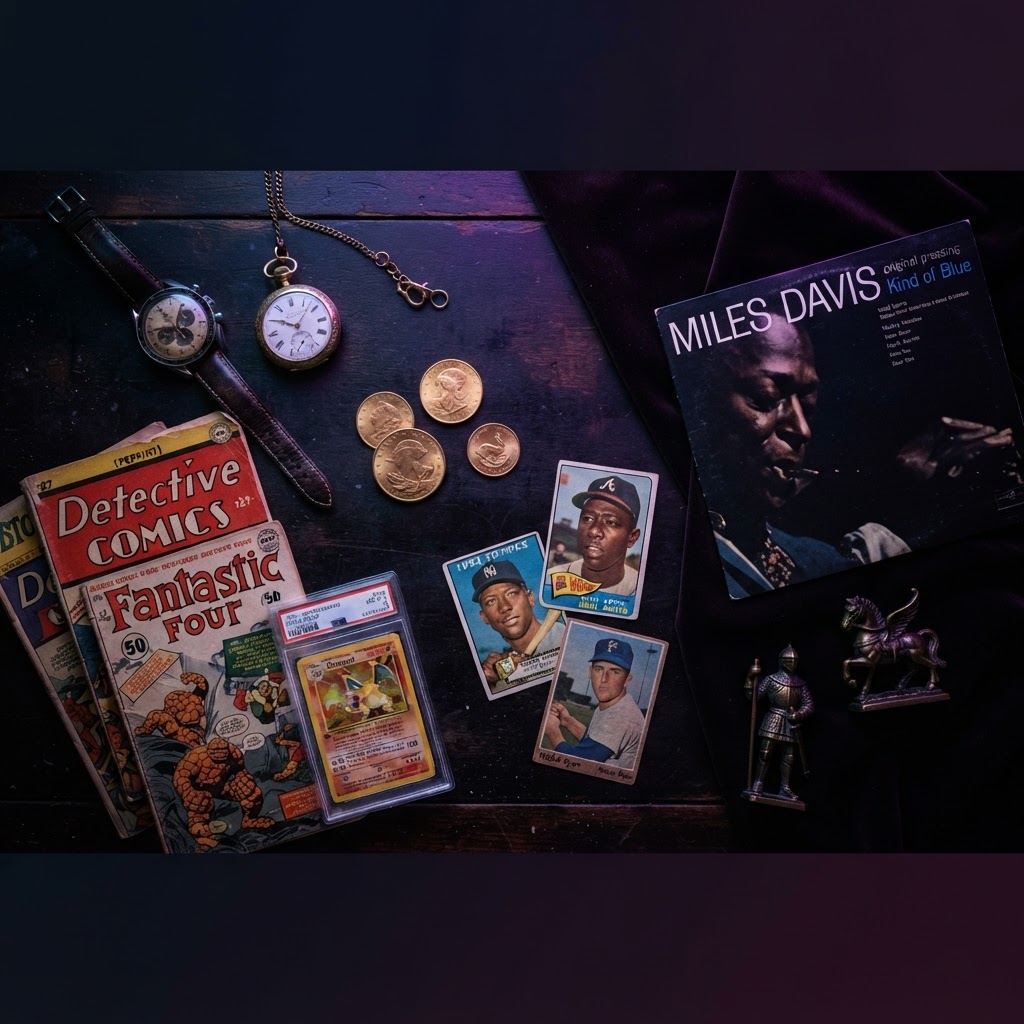
How to Track Collectible Prices Over Time
Learn how to track collectible prices over time. Monthly re-valuation, price history timelines, market trends, and portfolio performance.
Collectible prices are not static — they rise and fall with market trends, cultural events, and economic conditions. Tracking prices over time helps you understand your collection's performance, identify buying and selling opportunities, and maintain accurate insurance valuations. This guide covers how to track collectible prices effectively.
Why Track Prices Over Time?
- •Understand which items are appreciating and which are declining
- •Identify the right time to buy or sell
- •Maintain accurate insurance valuations
- •Track your collection's performance as an investment
- •Spot market trends before they become obvious
- •Build a historical record of your collection's value
How to Track Prices
The most effective way to track prices is with collection management software that automates the process. MPC automatically re-values your items monthly, recording each valuation in a price history timeline. Over time, this builds a clear picture of how each item's value has changed.
What Is a Price History Timeline?
A price history timeline is a record of every valuation an item has received over time. Each entry includes the date, the valuation, the source (AI or manual), and any notes. This timeline lets you see exactly when an item's value changed and by how much — essential for understanding market movements.
Understanding Market Trends
Collectible markets are driven by various factors: player performance for sports cards, set releases for trading cards, economic conditions for luxury goods, and cultural trends for all categories. By tracking prices over time, you can identify which factors are driving your collection's value and make informed decisions.
Portfolio-Level Price Tracking
Beyond individual items, track your collection's total value over time. MPC provides a value-over-time chart that shows how your collection's worth has changed, along with ROI (return on investment) calculations. This portfolio-level view helps you understand your collection's overall performance.
When to Update Prices Manually
MPC's automatic monthly re-valuation handles most of the work. But you should also update prices manually when: you have a professional appraisal, you see a significant market event (e.g., a player is inducted into the Hall of Fame, a set is announced), or you are preparing for insurance review or estate planning.
How to Interpret Price History Charts
Price history charts are the heartbeat of any serious collection, offering insights into market sentiment and liquidity. To properly interpret these trends, you must look beyond the raw numbers and identify volume alongside price action. A high price achieved on low volume may be an outlier caused by a single motivated buyer, whereas consistent price movement on high volume indicates a genuine shift in market interest. Analyze volatility periods; sharp spikes followed by quick drops often signal speculative bubbles. Conversely, a steady, gradual climb suggests long-term demand and sustainable growth. By tracking these charts over three to five years, you can identify seasonal trends that might impact your buying or selling strategy. Never base a major financial decision on a single month of data; instead, focus on the moving average to filter out market noise and see the true long-term value trajectory.
Key Metrics for Price Charts
- •Observe average transaction volume
- •Compare peak prices to moving averages
- •Identify cyclical market demand periods
- •Filter out outliers in auction results
- •Assess the spread between buyer and seller
- •Monitor price stability across multiple platforms
Frequently Asked Questions
How often should I track prices?
MPC automatically re-values items monthly, which is sufficient for most collectors. For active traders, you may want to check values more frequently. For insurance, review your full collection valuation at least annually.
Where do AI valuations get their price data?
MPC searches current market listings — auction results, marketplace sales, and dealer prices — at the time of each valuation. You can see the actual listings used as sources for each estimate.
Can I track prices for items I plan to sell?
Yes. Mark any item as "for sale" with a listing price, and MPC will track that alongside the estimated market value, so you can see if your listing price is in line with the market.
Join thousands of collectors using My Premium Collection to catalogue, value, and preserve their collectibles — privately and securely.
Track Your Collection's Prices — FreeRelated Guides
How to Track the Value of Your Collection Over Time
Learn how to track your collection's value over time. Monthly re-valuation, price history, portfolio analytics, and ROI tracking for collectors.
Learn moreHow to Value a Collection
Learn how to value a collection. AI valuation, market comparables, professional appraisal, and how to track collection value over time.
Learn moreHow to Keep Records of Your Collectibles
Learn how to keep records of your collectibles. What to document, how to store records securely, and how to ensure they survive for the next generation.
Learn moreHow to Catalogue a Collection
Learn how to catalogue a collection step by step. What to record for each item, how to organize your catalogue, and how collection management software makes it easy.
Learn more