
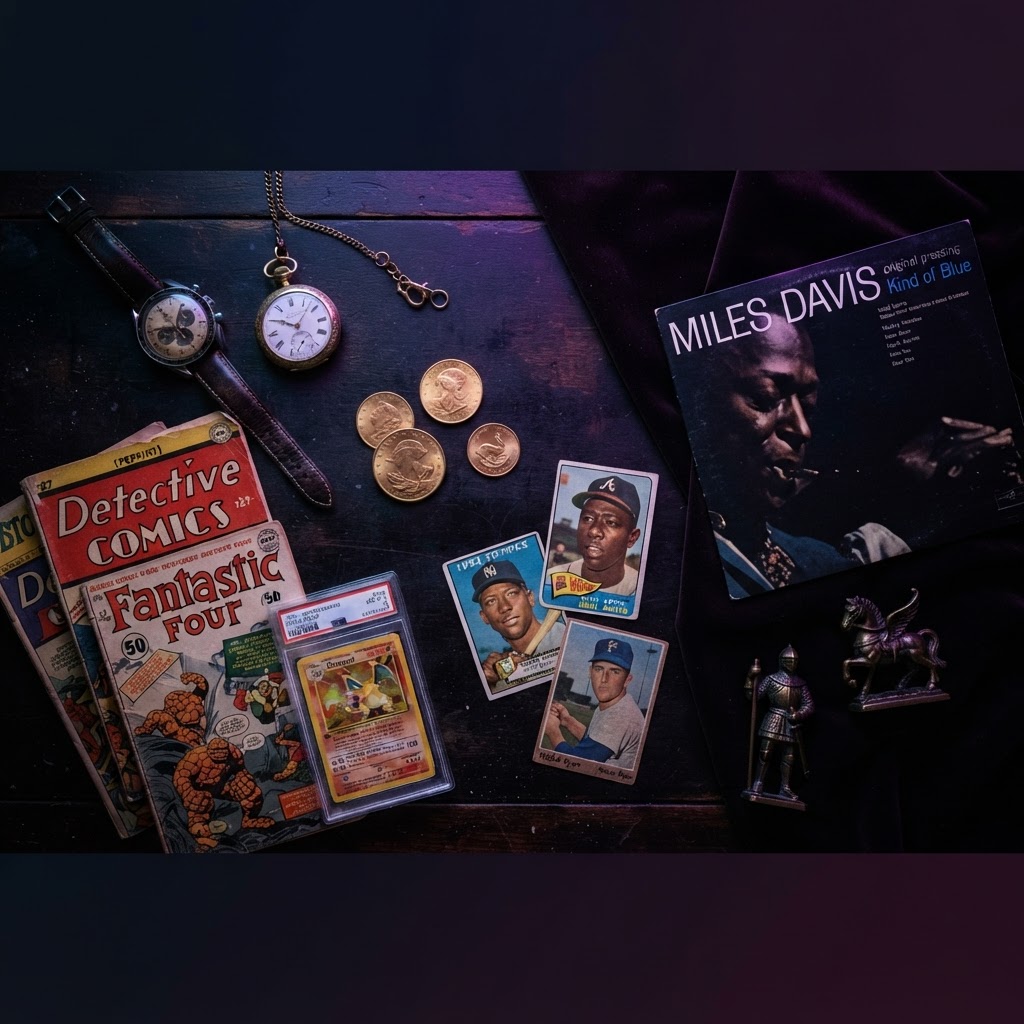
Collection Legacy Planning
Collection legacy planning tools. Designate guardians, document distribution wishes, write a final letter, and ensure your collection is preserved and passed on according to your wishes.
A collection is not just a set of objects — it is years of knowledge, passion, and personal history. What happens to it when you are no longer able to manage it? MPC's Collection Legacy Planning tools ensure that your collection is preserved, documented, and passed on according to your wishes — not scattered, sold off, or forgotten.
The Legacy Plan Module
MPC's Legacy Plan module lets you document everything your family or executor needs to know about your collection: who should receive specific items, how the collection should be distributed, how it should be cared for, and who to contact for professional help.
What You Can Document
- •Primary and backup guardians — trusted people who can manage the collection if you cannot
- •Distribution instructions — your wishes for how the collection should be divided or preserved
- •Care instructions — how items should be stored, handled, and maintained
- •Key contacts — appraisers, insurers, attorneys, accountants, and executors
- •Final letter — a personal letter to your loved ones about the collection and what it means
- •Item-level intended recipients — designate who should receive specific items
- •Legacy notes — the story behind each item, preserved for the next generation
The Collection Circle
Legacy planning is not just about documents — it is about people. The Collection Circle lets you invite family members and advisors into your collection now, while you are still able to guide them. You can grant view access, allow them to add items, or designate them as guardians. This ensures that the people who will inherit your collection already understand it when the time comes.
Emergency Access
MPC's emergency access feature allows a designated guardian to request access to your collection if you become incapacitated. You set a waiting period (default 72 hours) during which you can decline the request. If you do not respond, access is granted automatically — ensuring your collection is never locked away from the people who need to manage it.
Legacy planning is not about mortality — it is about stewardship. Document your collection's story today so it is preserved for tomorrow.
Why Collectors Need a Legacy Plan
A collection is often a reflection of a collector's life, passion, and personal history. Without a comprehensive legacy plan, the future of these cherished objects is left to chance, which can result in emotional family disputes, undervalued sales, or the unwanted liquidation of items that meant everything to the collector. A legacy plan is not just about asset distribution; it is about preservation and intentionality. It empowers collectors to dictate exactly how their collection will be handled, whether they desire items to be donated to a museum, passed down through generations, or sold to fund a specific cause. Establishing a plan ensures that the effort invested in building the collection is honored, providing clear instructions for executors and beneficiaries. By removing ambiguity, you protect your family from the burden of complex decisions during a time of grief and ensure that your collection remains a source of joy rather than conflict.
Talking to Family About Your Collection
- •Determine who among your family has a genuine interest in inheriting specific items
- •Discuss the financial and logistical responsibilities of maintaining the collection
- •Explain the historical or emotional significance behind individual pieces
- •Assess whether heirs are prepared for the insurance and security requirements involved
- •Host a walkthrough of your collection to answer questions about provenance and care
- •Document the agreed-upon wishes in a formal memorandum to avoid future misunderstandings
Working with Executors and Attorneys
Collaborating with legal and financial professionals is essential to ensuring your legacy plan is legally binding and effectively executed. Standard estate planning often fails to account for the unique complexities of collectibles, such as fluctuating valuations, the need for specialized shipping, or the specific requirements of museum donations. You should work with attorneys who specialize in estate and tax law to create specific provisions for your collection within your trust or will. Furthermore, identifying an executor who understands the nuanced nature of your assets is vital. You might consider naming a specialized collectible advisor alongside a general executor to oversee the valuation, marketing, or charitable gifting process. These professionals ensure that all legal requirements are met, minimizing tax liabilities and ensuring the logistics of your final wishes are executed with the professional care your collection deserves.
Digital Legacy and Continuity Planning
In the modern age, your legacy plan must extend into the digital realm. As collectors move their inventories and authentication records online, it is crucial to ensure that your heirs have the means to access these systems after you pass away. Continuity planning involves securing your passwords, digital keys, and storage locations for your inventory databases and provenance documentation. You must create a roadmap for your heirs, perhaps stored in a secure digital vault or physical safety deposit box, that explains how to navigate your digital files. Without this, your heirs may find themselves locked out of crucial accounts, rendering your meticulous records inaccessible and effectively devaluing your collection. Integrating digital access into your broader estate plan ensures that your beneficiaries possess the information necessary to maintain, appraise, and distribute your assets according to your carefully considered final wishes.
Frequently Asked Questions
Is legacy planning a legal document?
No. MPC's legacy planning tools are organizational — they help you document your wishes and share information with your family and advisors. They are not a substitute for a will, trust, or estate plan prepared with a qualified attorney.
Who can access my legacy plan?
Only you and the people you explicitly invite through the Collection Circle. Your legacy plan is completely private until you choose to share it.
Can I update my legacy plan?
Yes. You can update your legacy plan at any time. We recommend reviewing it annually or whenever your collection or family circumstances change.
Join thousands of collectors using My Premium Collection to catalogue, value, and preserve their collectibles — privately and securely.
Plan Your Collection's Legacy — FreeRelated Features
Private Collection Management
Private collection management software. Your collection is private by default — no public sharing, no marketplace exposure. Secure, encrypted, and visible only to you and your invited circle.
Learn moreCollection Provenance Documentation
Document collectible provenance — where you acquired each item, when, from whom, and for how much. Permanent provenance records that preserve your collection's history.
Learn moreCollection Insurance Inventory
Create a collection insurance inventory in minutes. Export a complete record of your collectibles with photos, values, and descriptions — ready for your insurer.
Learn moreCollectible Management Software
Private collectible management software for cataloguing, valuing, and preserving personal collections. AI identification, market valuation, provenance tracking, insurance inventory, and legacy planning.
Learn more