
How to Determine the Condition of a Collectible
Learn how to determine the condition of a collectible. Standard grading scales, condition factors, and how AI can assess condition from photos.
Condition is the single most important factor in a collectible's value. The same item in different conditions can vary in value by 10x or more. This guide covers how to determine the condition of a collectible using standard grading scales.
Why Condition Matters
Collectors and buyers care about condition because it indicates how well-preserved an item is, how close it is to its original state, and how rare it is in that condition. A PSA 10 trading card is rare because most cards have some wear; that rarity drives value. Understanding condition helps you value your items accurately and make informed buying and selling decisions.
Standard Condition Scales
Different collectible categories use different grading scales, but most follow a similar pattern from mint (perfect) to poor (heavily damaged):
- •Mint — perfect, as new, no visible flaws
- •Near Mint — nearly perfect, minor flaws visible only on close inspection
- •Excellent — very well-preserved, minor wear
- •Very Good — above average, some visible wear
- •Good — average, visible wear but no major damage
- •Fair — below average, significant wear or damage
- •Poor — heavily worn or damaged
Category-Specific Grading
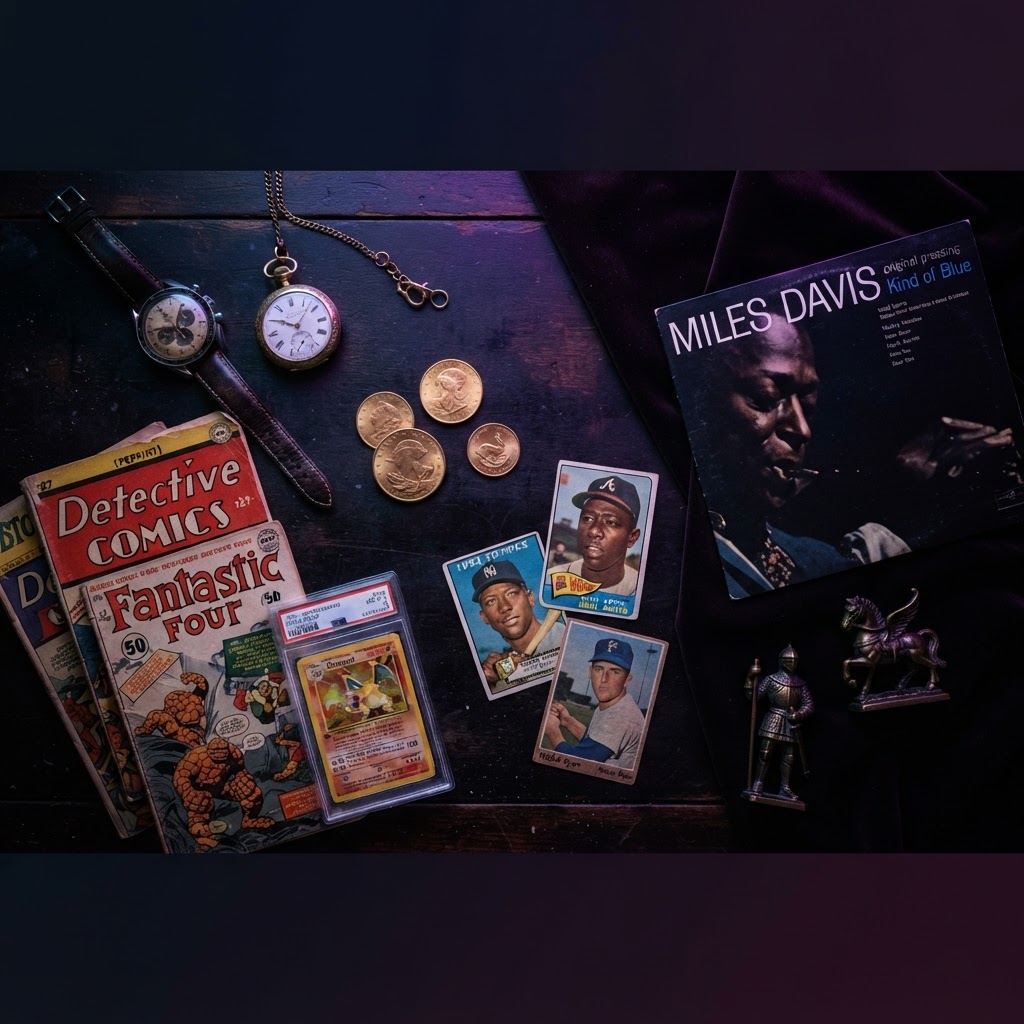
Each category has its own grading standards. Trading cards use PSA/BGS scales (1-10). Coins use the Sheldon scale (1-70) with Mint State and Proof designations. Comics use a 10-point scale (Mint to Poor). Books use fine/near fine/very good/good. Watches use mint/excellent/very good/good/fair. Use the standard for your category, and for high-value items, consider professional grading.
What to Look For
- •Wear — scratches, scuffs, rubbing
- •Damage — tears, creases, chips, cracks, dents
- •Discoloration — fading, staining, toning, foxing
- •Restoration — any repairs or alterations from original state
- •Completeness — missing parts, accessories, or documentation
- •Centering — for cards and stamps, how well-centered the image is
AI Condition Assessment
MPC's AI can assess condition from a photograph, providing an initial condition estimate and noting visible flaws. This is a starting point — for high-value items, professional grading provides the most accurate and defensible assessment. The AI assessment is included with every identification.
When to Get Professional Grading
For items worth more than a few hundred dollars, professional grading is often worth the cost. Graded items sell for more, are easier to insure, and are more liquid. Professional grading also authenticates the item, which is valuable for high-value purchases. Use the AI condition assessment to decide whether professional grading is worth the investment.
How to Handle Borderline Condition Grades
When a collectible sits exactly on the fence between two grades, the decision process requires extreme objectivity and caution. You must adopt a conservative mindset, always defaulting to the lower grade to avoid misleading potential buyers or overvaluing your asset. Utilize high-magnification tools like a jeweler's loupe to inspect for micro-defects that might not be visible to the naked eye, such as hairline scratches, microscopic paint chips, or faint foxing on paper items. Assess the cumulative effect of minor flaws; sometimes, the sum of tiny imperfections can downgrade an item faster than one noticeable blemish. Document these specific borderline traits clearly in your sales listing or catalog. Transparency is essential for building long-term trust in the collecting community, and buyers are generally much more forgiving of a conservative grade than a perceived exaggeration of quality.
Best Practices for Borderline Grades
- •Always err on the side of a lower grade
- •Use a 10x magnification loupe for inspection
- •Check for environmental aging versus handling wear
- •Compare against official third-party grading standards
- •Note every minor flaw in your provenance records
- •Provide macro photos of the disputed condition area
Frequently Asked Questions
Can AI accurately assess condition?
MPC's AI provides a good initial condition estimate from a photograph, noting visible flaws. For high-value items, professional grading provides the most accurate and defensible assessment.
Should I get all my items professionally graded?
No. Professional grading costs money and takes time. It is worth it for high-value items where the grade significantly affects value. For lower-value items, your own assessment or the AI assessment is sufficient.
What is the most important condition factor?
It depends on the category. For cards, centering and corners are critical. For coins, surface preservation and strike. For comics, page quality and spine stress. Learn the key factors for your category.
Join thousands of collectors using My Premium Collection to catalogue, value, and preserve their collectibles — privately and securely.
Assess Your Collection — FreeRelated Guides
How to Identify an Unknown Collectible
Learn how to identify an unknown collectible. AI identification, visual research, community resources, and when to consult an expert.
Learn moreHow to Photograph Collectibles for Identification
Learn how to photograph collectibles for AI identification and cataloguing. Lighting, angles, resolution, and best practices for each collectible type.
Learn moreHow to Value a Collection
Learn how to value a collection. AI valuation, market comparables, professional appraisal, and how to track collection value over time.
Learn moreHow to Catalogue a Collection
Learn how to catalogue a collection step by step. What to record for each item, how to organize your catalogue, and how collection management software makes it easy.
Learn more